Cenozoic
Episode 168/169: Grasslands
Published on September 1st, 2025 | by David Marshall
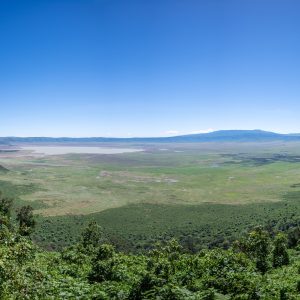
Grass dominated ecosystems cover 40% of the land on Earth. Prof. Caroline Strömberg explains why they are so successful... Read More →

The Neogene period is a division of earth’s history spanning from around 23 to 0.05 million years ago, and during which the global climate gradually cooled. The continents were largely in their modern positions. One major geographic change was the closure of a seaway known as the Isthmus of Panama when South and North America became connected. This land bridge diverted warm waters northwards, forming the Gulf Stream, and allowed the migration of animals between North and South America. As a result of a cooler global climate, tropical rainforests gradually gave way to grasslands. It was in this environment that the first hominids evolved in Africa and began to spread across the world. The end of the Neogene is marked by the establishment of the glacial conditions, characteristic the Quaternary.
Published on September 1st, 2025 | by David Marshall
Grass dominated ecosystems cover 40% of the land on Earth. Prof. Caroline Strömberg explains why they are so successful... Read More →
Published on August 22nd, 2025 | by Guest Blogger
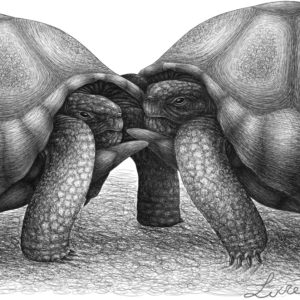
While we have discussed the importance of Langebaanweg in terms of its geological positioning and history, the thing it is really famous for is the incredible size and diversity of its fossil assemblage. In the last [&hellip... Read More →

Published on July 1st, 2025 | by David Marshall
Dr Christine Sosiak introduces us to the stem ants... Read More →
Published on September 5th, 2024 | by Guest Blogger
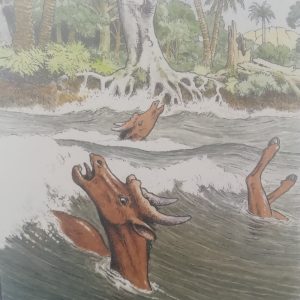
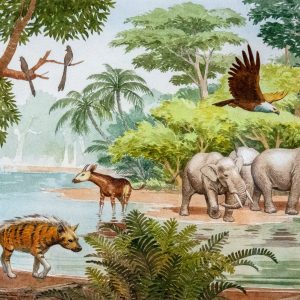
Langebaanweg is a Mio-Pliocene aged fossil locality on the west coast of South Africa (about 120 Km from Cape Town), that has produced a staggering diversity and abundance of fossil material. In the first part of [&hellip... Read More →
Published on June 30th, 2024 | by Guest Blogger
The first instalment of Brigette Cohen's series on the South African lagerstätte Langebaanweg... Read More →
Published on October 8th, 2023 | by David Marshall
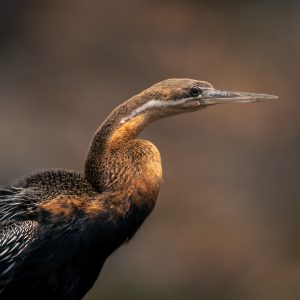
We're joined by "neckspert" Dr Ryan Marek to explore the evolutionary significance of bird necks... Read More →
Published on April 20th, 2022 | by David Marshall
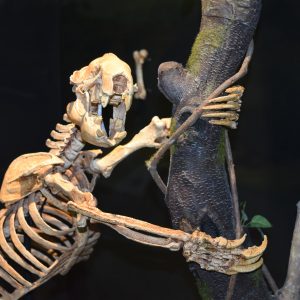
We hang out with the sloths of Hispaniola, looking for new species hiding within Dr Robert McAfee's measurements... Read More →
Published on April 15th, 2021 | by David Marshall
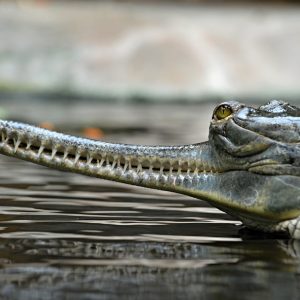
We look at rates of evolutionary innovation in crocodiles through time with Dr Tom Stubbs... Read More →
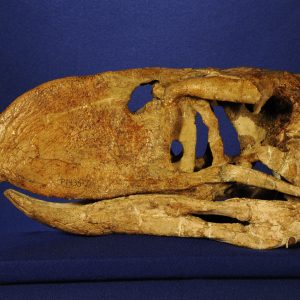
Published on September 15th, 2019 | by Liz Martin-Silverstone
Terror birds, or phorusrhacids as they are known scientifically, are a group of large, flightless birds that lived during the Cenozoic, and truly lived up to their name. Known for their large, powerful skulls, and enormous [&hellip... Read More →
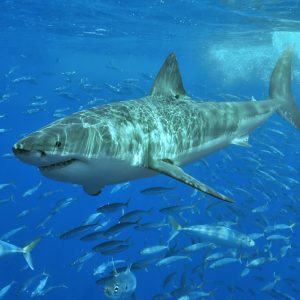
Published on April 15th, 2019 | by Liz Martin-Silverstone
Undoubtedly, Megalodon is the world’s most famous extinct shark is and in this episode, we hear everything we know about this taxon, its ecology and how it got to be so big. Its ultimate extinction is [&hellip... Read More →


 Episode 172: Rhynchocephalians
February 5th | by
Episode 172: Rhynchocephalians
February 5th | by
 Episode 171: Freshwater Mosasaurs
December 12th | by
Episode 171: Freshwater Mosasaurs
December 12th | by
 Society of Vertebrate Paleontology Annual Meeting 2025
December 3rd | by
Society of Vertebrate Paleontology Annual Meeting 2025
December 3rd | by
 Episode 170: Cariocecus bocagei
September 15th | by
Episode 170: Cariocecus bocagei
September 15th | by
 Episode 168/169: Grasslands
September 1st | by
Episode 168/169: Grasslands
September 1st | by