September 28th, 2016 | by David Marshall
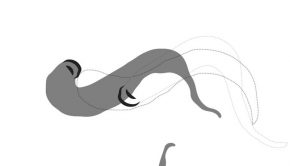
Research carried out by Liverpool John Moores University (LJMU) has found that an African lungfish can leave trackways on sand [&hellip
September 16th, 2016 | by David Marshall
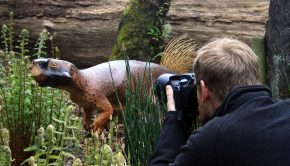
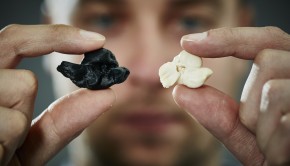
We sat down in the Senckenberg Museum, Frankfurt, with Dr Jakob Vinther, University of Bristol, to examine the colour patterns [&hellip
September 1st, 2016 | by David Marshall
Happy birthday Palaeocast! Who can believe that it’s already four years since we launched? We’ve done so much in that [&hellip
April 21st, 2016 | by Liz Martin-Silverstone
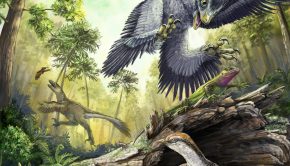
The extinction of non-avian dinosaurs at the end of the Cretaceous has always been a discussion favourite amongst vertebrate palaeontologists. [&hellip
April 13th, 2016 | by Liz Martin-Silverstone
Echolocation is an amazing ability that some mammals have evolved. Using sonar frequencies, dolphins and other toothed whales can communicate [&hellip
March 15th, 2016 | by Liz Martin-Silverstone
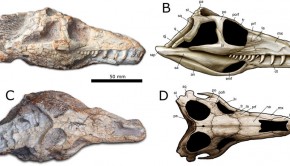
Archosauriforms are some of the most well studied fossils in existence, including birds, crocodiles, dinosaurs, pterosaurs, and their ancestors, first [&hellip
January 18th, 2016 | by Liz Martin-Silverstone
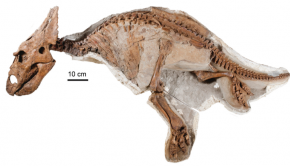
Juvenile dinosaurs are less common than adults, and typically not as well preserved due to the fact that their bones [&hellip
November 17th, 2015 | by David Marshall
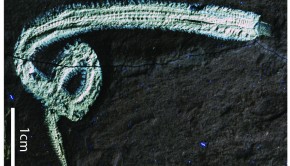
A new fossil from Lebanon is named today in BMC Evolutionary Biology as Rollinschaeta myoplena. We spoke to lead author Luke Parry about this [&hellip
November 10th, 2015 | by Laura Soul
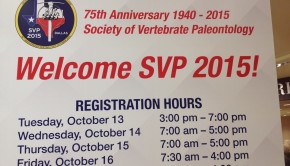
Welcome to our coverage of the Society of Vertebrate Paleontology (SVP) annual meeting from Dallas, Texas. This year was the 75th anniversary [&hellip
November 9th, 2015 | by Liz Martin-Silverstone
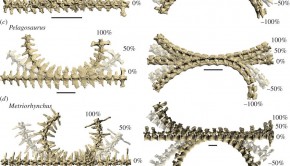
Crocodylomorphs today are not thought to be the most diverse group, consisting of all semi-aquatic forms of alligators, crocodiles, and gharials. [&hellip