Episode 52: Melanin
September 28th, 2015 | by David Marshall
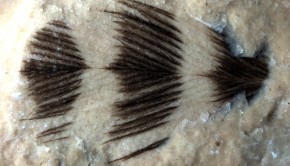
Melanin is a pigment that is found across the animal kingdom. Melanosomes, the organelles that contain melanin, have been found [&hellip

September 28th, 2015 | by David Marshall
Melanin is a pigment that is found across the animal kingdom. Melanosomes, the organelles that contain melanin, have been found [&hellip
September 1st, 2015 | by David Marshall
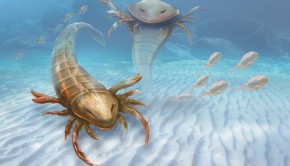
Eurypterids, or ‘sea-scorpions’ are an extinct group of chelicerates: the group containing the terrestrial arachnids (such as spiders and scorpions) [&hellip
August 14th, 2015 | by David Marshall
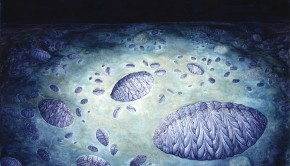
On today’s episode we’re revisiting Mistaken Point, Newfoundland, Canada. At this lagerstätte it is possible to find large bedding planes full of Precambrian organisms [&hellip
July 31st, 2015 | by David Marshall
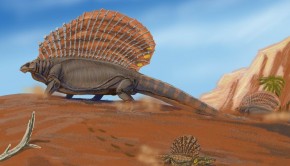
Synapsids are one of the major groups of terrestrial vertebrates. They first appear in the Carboniferous period and since that [&hellip
July 17th, 2015 | by David Marshall
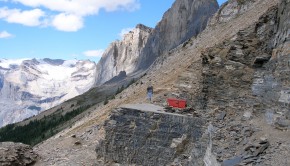
The Burgess Shale is probably the world’s most famous lagerstätte (site of special preservation). Discovered in 1909 on Mt. Stephen, [&hellip
June 29th, 2015 | by David Marshall
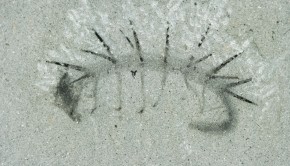
It’s been quite a week for lobopodians! First off, we’ve had the redescription of Hallucigenia by Dr Martin Smith. This [&hellip
June 15th, 2015 | by Liz Martin-Silverstone
The world is currently undergoing a massive biodiversity crisis, and many people have said that we are in the next [&hellip
June 1st, 2015 | by David Marshall
The Cretaceous-Paleogene (K-Pg) mass extinction was the latest of the ‘big five’ events. Approximately 75% of species went extinct, with [&hellip
May 1st, 2015 | by David Marshall
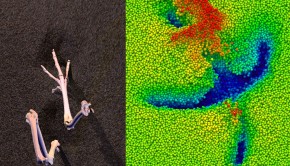
We’ve covered ichnology before, in Episode 14, but it’s time to revisit trackways with a high-tech approach. We talk to [&hellip
April 15th, 2015 | by David Marshall
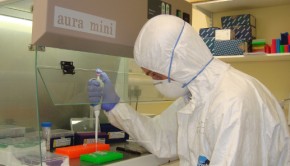
DNA (deoxyribonucleic acid) is a molecule that encodes the genetic information within every species of life on earth. The information [&hellip


 Episode 173: Petrified Forest
March 17th | by
Episode 173: Petrified Forest
March 17th | by
 Episode 172: Rhynchocephalians
February 5th | by
Episode 172: Rhynchocephalians
February 5th | by
 Episode 171: Freshwater Mosasaurs
December 12th | by
Episode 171: Freshwater Mosasaurs
December 12th | by
 Society of Vertebrate Paleontology Annual Meeting 2025
December 3rd | by
Society of Vertebrate Paleontology Annual Meeting 2025
December 3rd | by
 Episode 170: Cariocecus bocagei
September 15th | by
Episode 170: Cariocecus bocagei
September 15th | by