Episode 72: Las Hoyas
January 18th, 2017 | by David Marshall
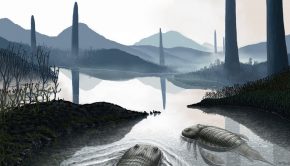
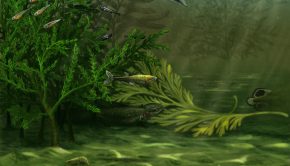
Las Hoyas is a Early Cretaceous lagerstätte (site of special preservation) located close to the city of Cuenca, Spain. In [&hellip

January 18th, 2017 | by David Marshall
Las Hoyas is a Early Cretaceous lagerstätte (site of special preservation) located close to the city of Cuenca, Spain. In [&hellip
September 28th, 2016 | by David Marshall
Research carried out by Liverpool John Moores University (LJMU) has found that an African lungfish can leave trackways on sand [&hellip
September 1st, 2016 | by David Marshall
Happy birthday Palaeocast! Who can believe that it’s already four years since we launched? We’ve done so much in that [&hellip
August 15th, 2016 | by David Marshall
Plants, Animals and fungi; these are all three of the Kingdoms of life we’re all most familiar with, but what [&hellip
June 28th, 2016 | by Laura Soul
Mongolia is a vast country with fossils from almost every period in the history of life. Important specimens representing the origin [&hellip
May 29th, 2016 | by David Marshall
Around 250 million years ago, the largest biotic crisis the world has ever known occurred. The Permo-Triassic Mass Extinction (PTME) [&hellip
March 18th, 2016 | by David Marshall
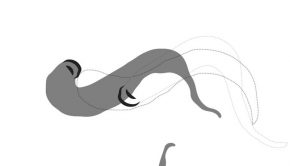
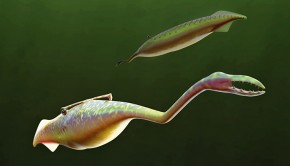
Tullimonstrum gregarium, better known as the ‘Tully Monster’ is a problematic fossil from the Late Carboniferous Mazon Creek lagerstätte, Illinois, USA. [&hellip
November 15th, 2015 | by Liz Martin-Silverstone
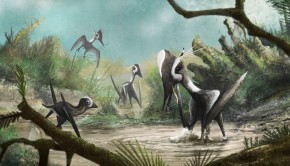
Pterosaurs were the first vertebrates to achieve powered flight, and lived in the skies above the dinosaurs during the Mesozoic. [&hellip
November 9th, 2015 | by Liz Martin-Silverstone
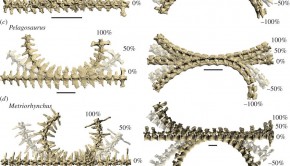
Crocodylomorphs today are not thought to be the most diverse group, consisting of all semi-aquatic forms of alligators, crocodiles, and gharials. [&hellip
October 15th, 2015 | by Liz Martin-Silverstone
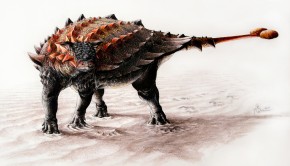
Ankylosaurs are a group of non-avian dinosaurs best known for their armour, tank-like bodies, and sometimes large tail clubs. First [&hellip


 Episode 172: Rhynchocephalians
February 5th | by
Episode 172: Rhynchocephalians
February 5th | by
 Episode 171: Freshwater Mosasaurs
December 12th | by
Episode 171: Freshwater Mosasaurs
December 12th | by
 Society of Vertebrate Paleontology Annual Meeting 2025
December 3rd | by
Society of Vertebrate Paleontology Annual Meeting 2025
December 3rd | by
 Episode 170: Cariocecus bocagei
September 15th | by
Episode 170: Cariocecus bocagei
September 15th | by
 Episode 168/169: Grasslands
September 1st | by
Episode 168/169: Grasslands
September 1st | by