Published on December 12th, 2025 | by David Marshall
Episode 171: Freshwater Mosasaurs
We’ve been given exclusive access to a brand new study examining the chemistry of a mosasaur tooth found within the Late Cretaceous Hell Creek Formation, North Dakota. The remarkable circumstances of how this tooth was discovered meant that multiple lines of chemical evidence could be reliably gathered, each acting as a powerful palaeoenvironmental proxy providing clues as to how and where this giant aquatic predator lived. The results of the study now mean that a revision of mosasaur palaeoecology is required and that food webs in one of the world’s most famous fossil deposits might need redrawing.
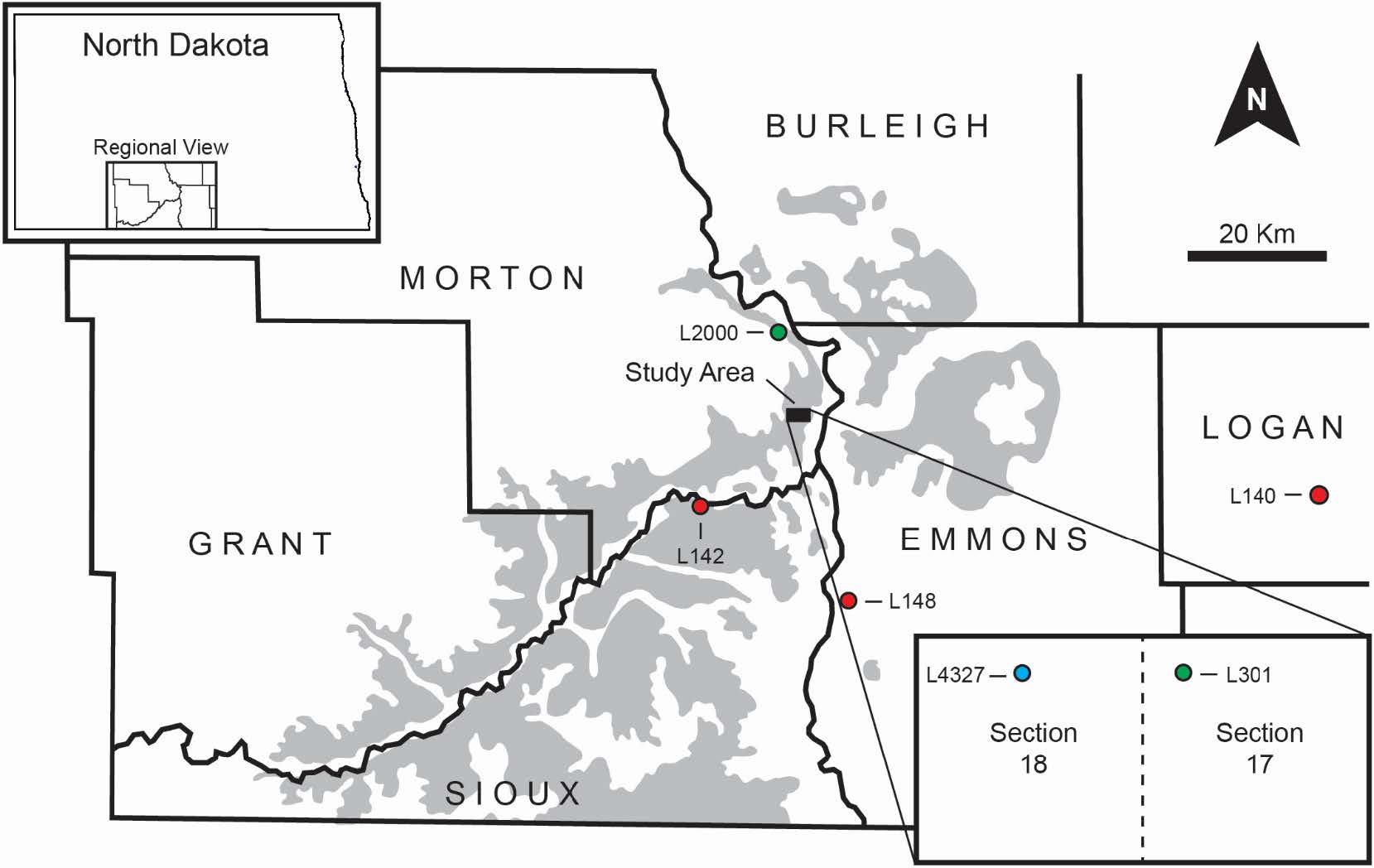
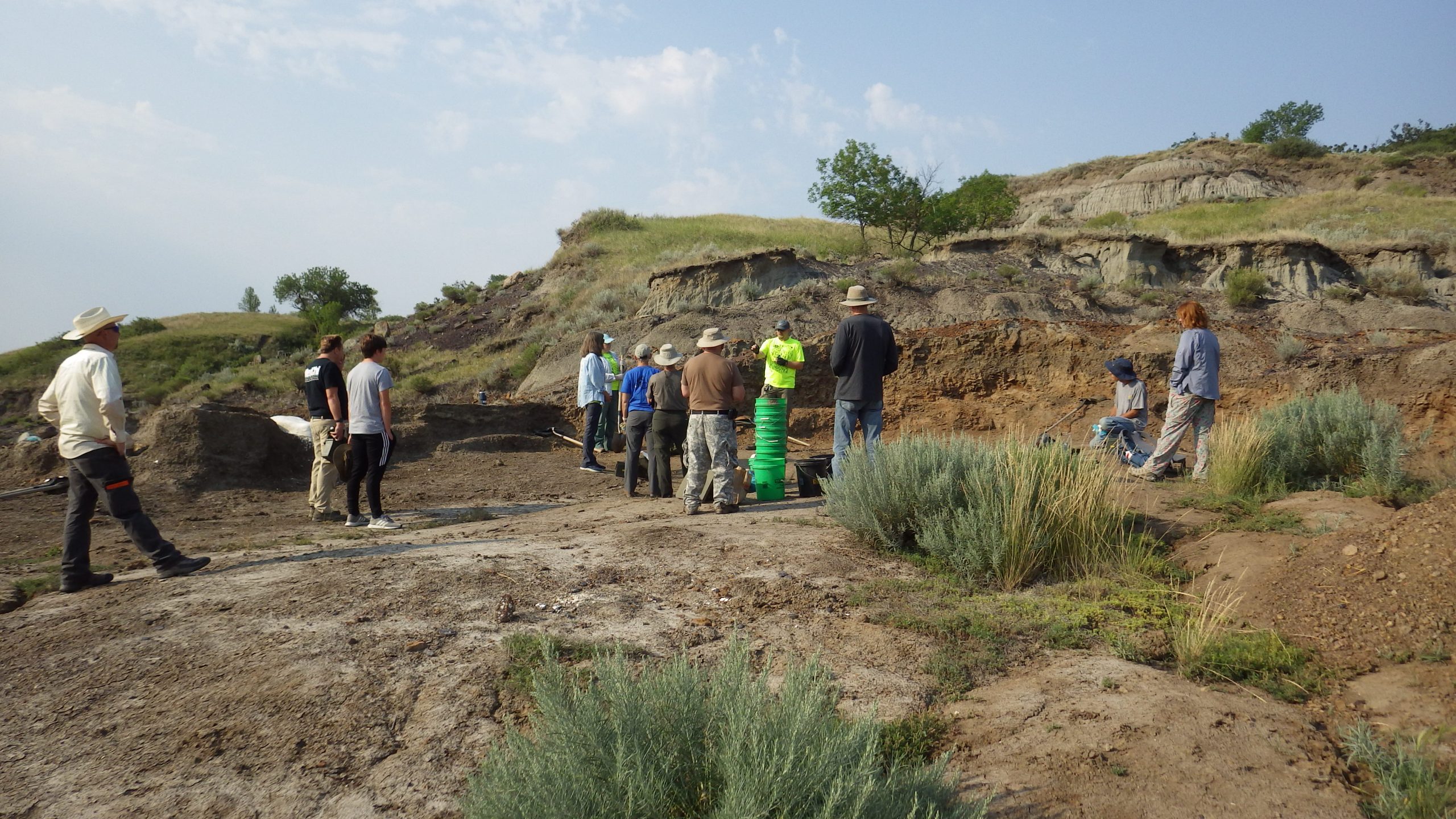
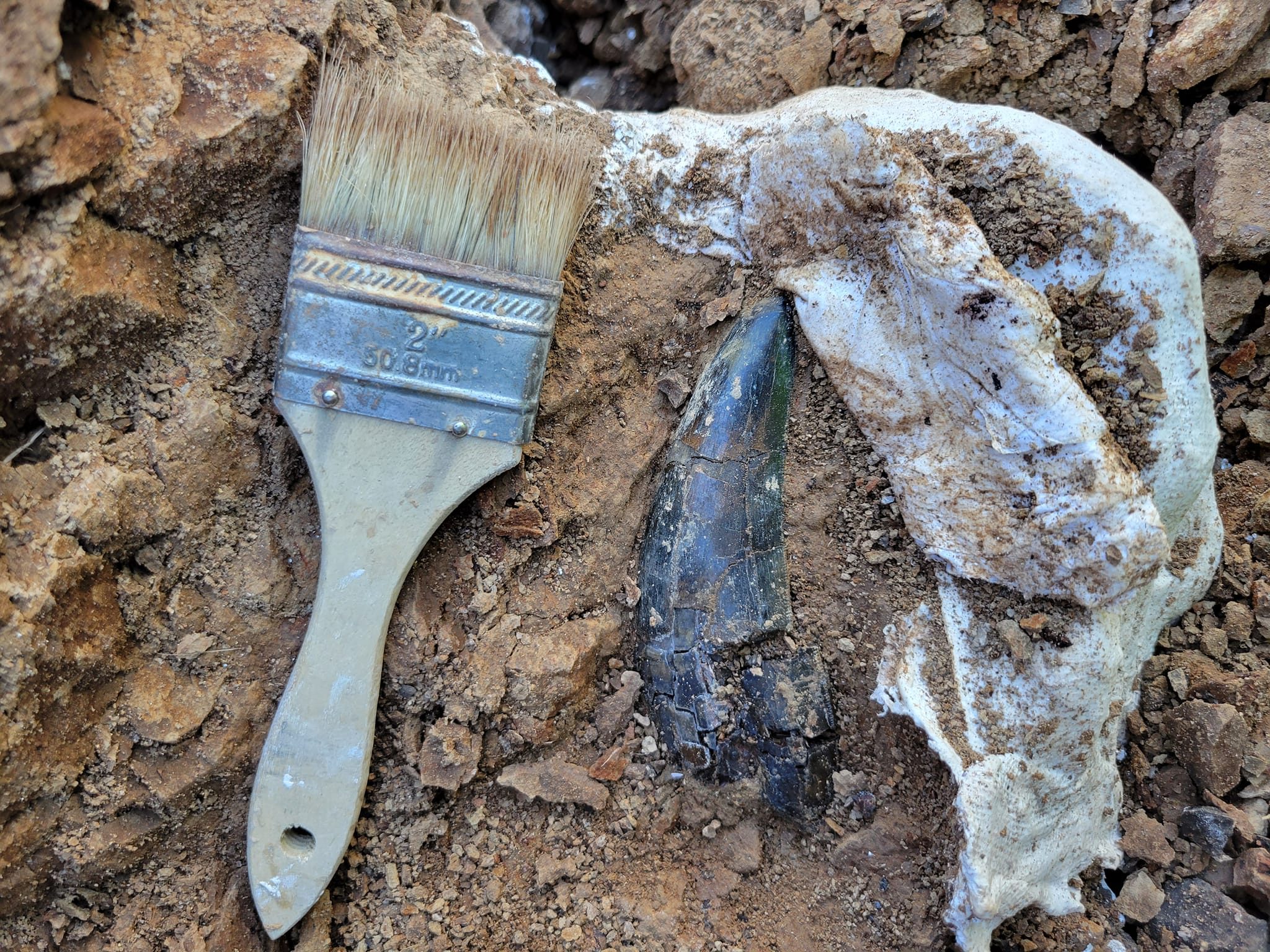
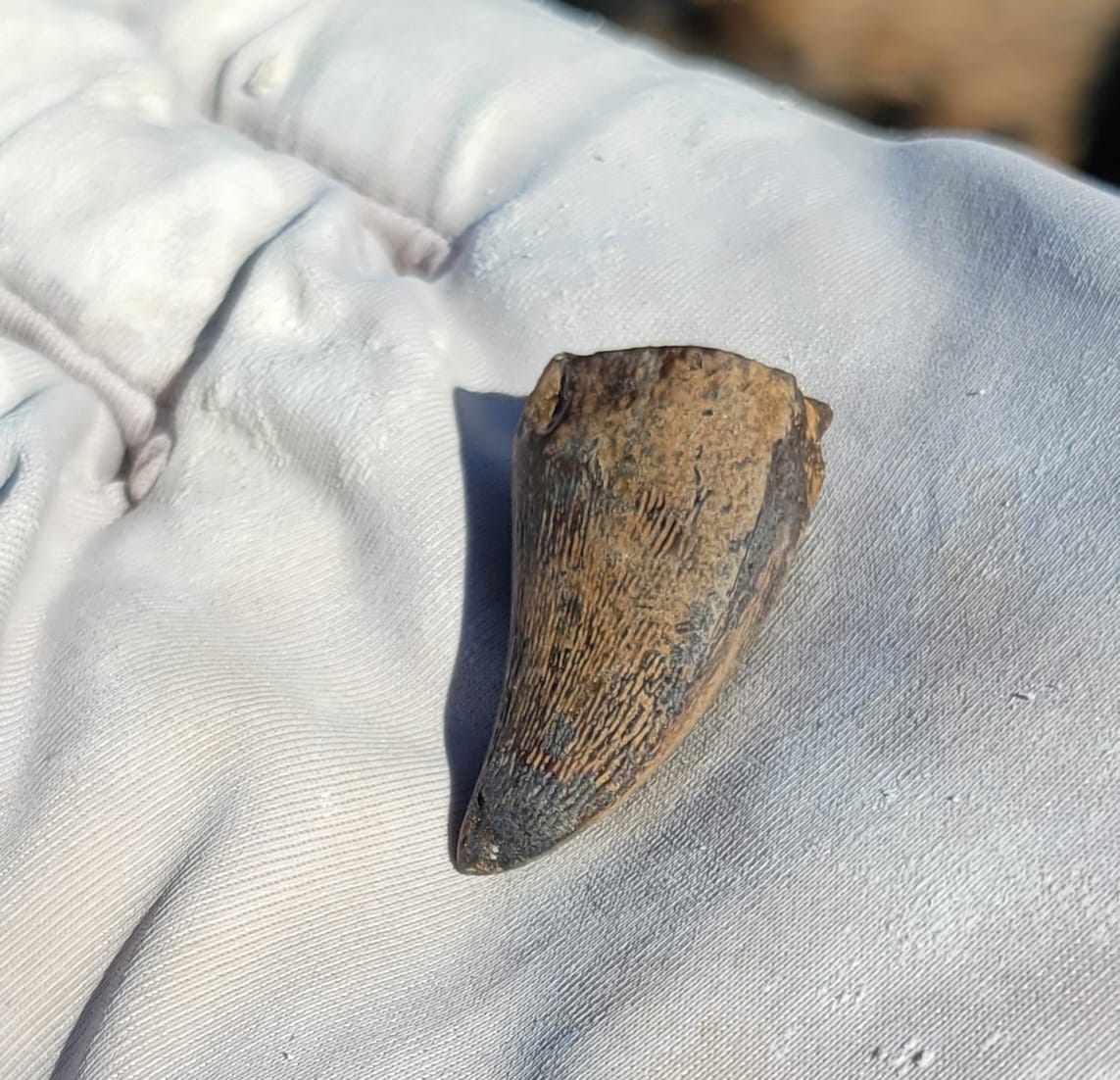
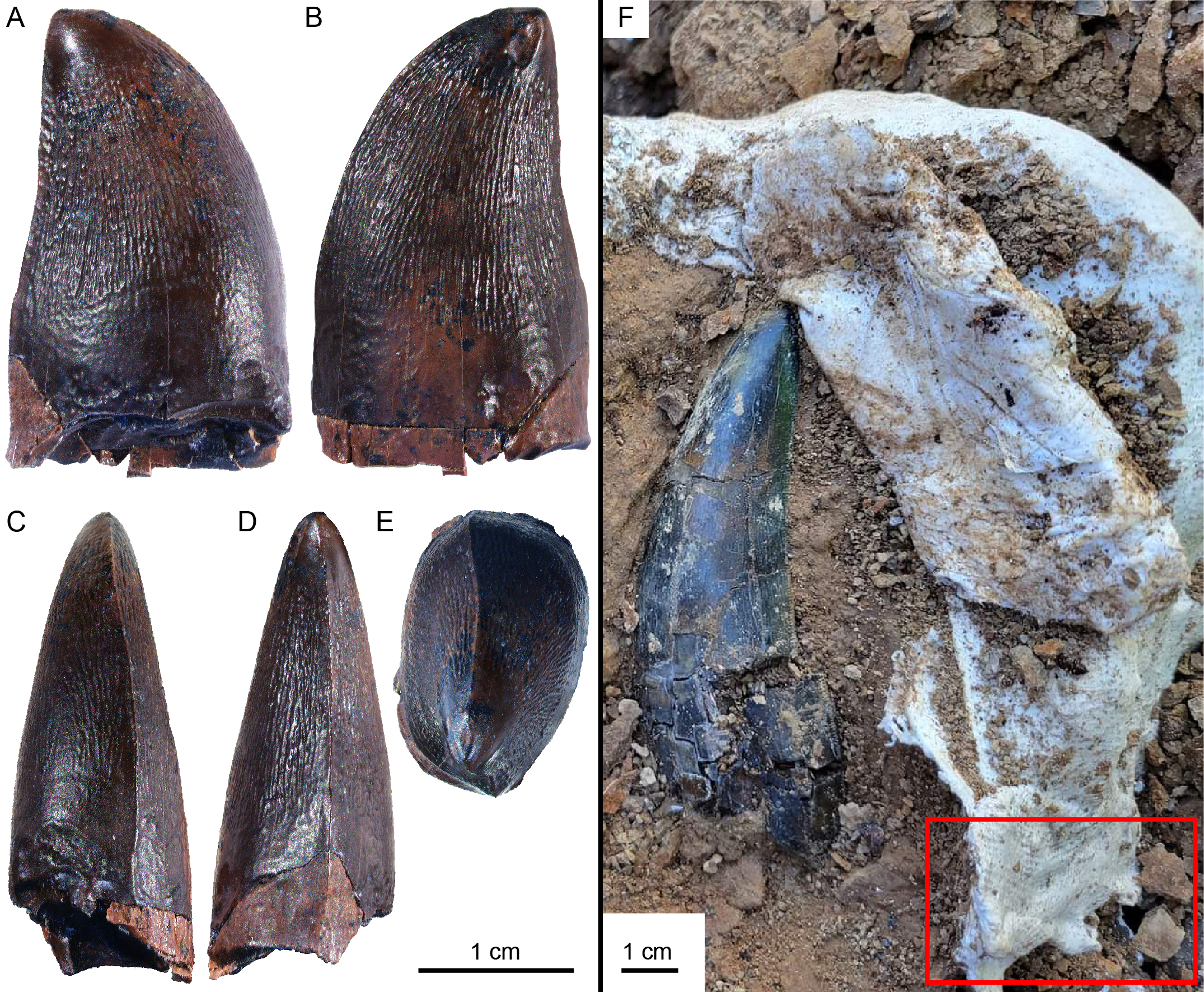
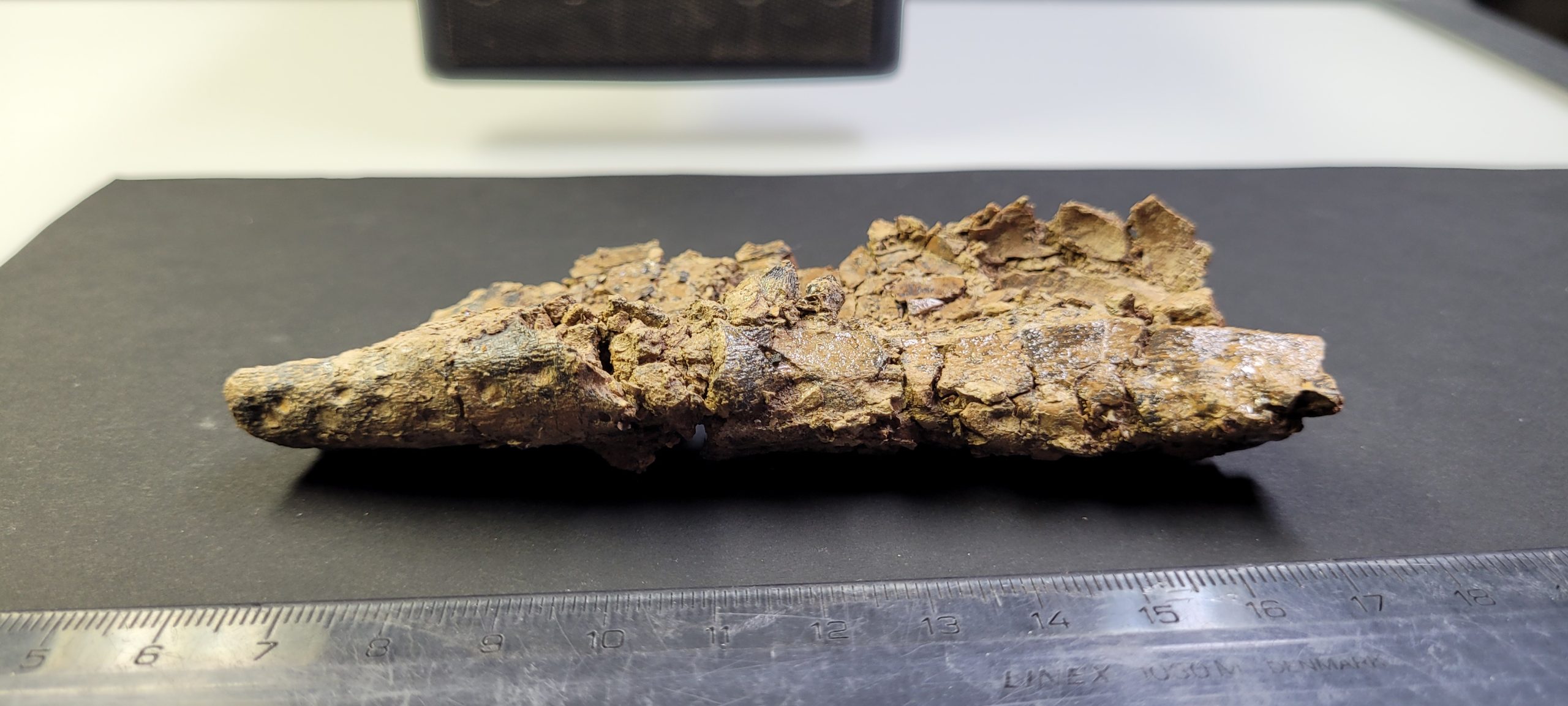
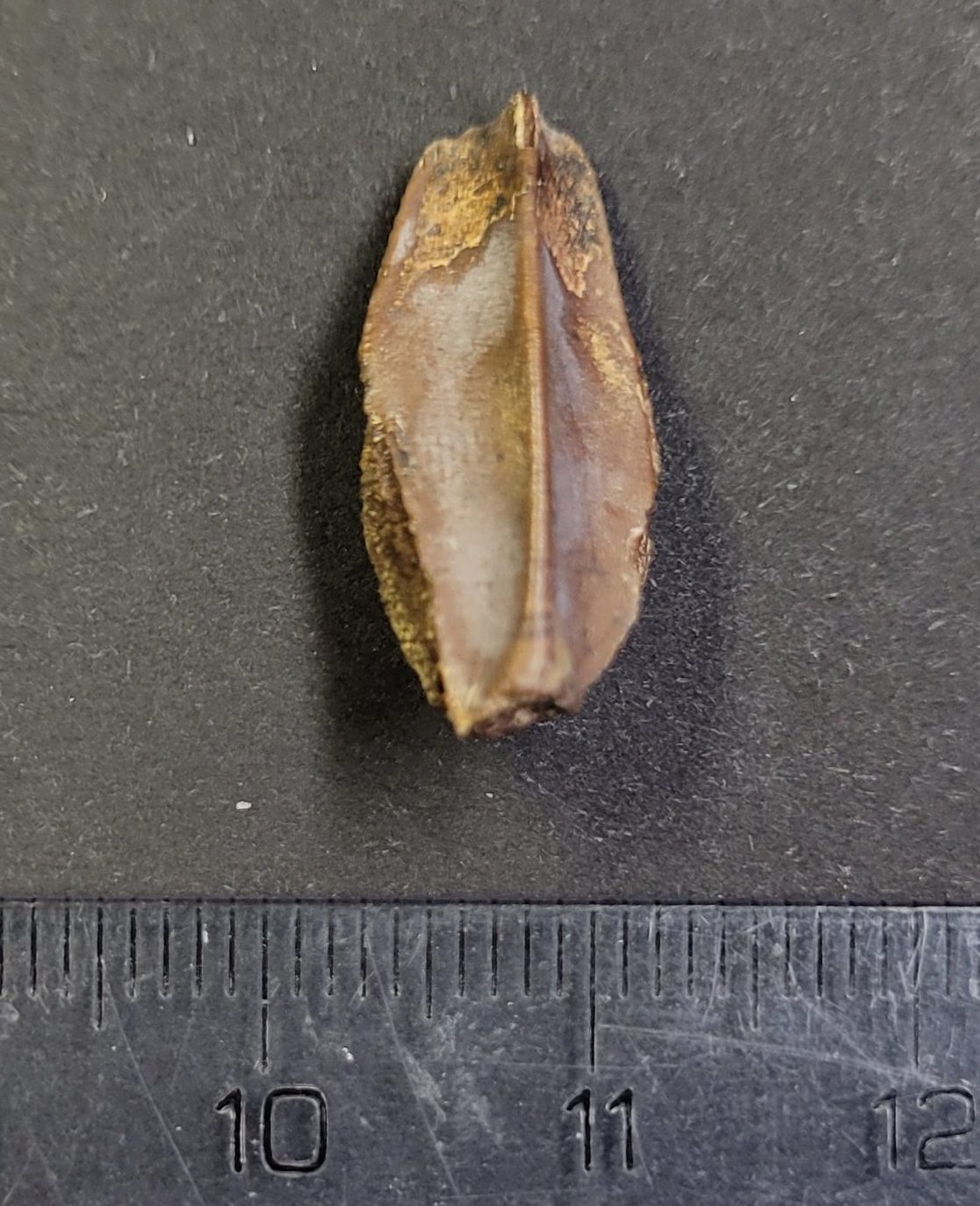
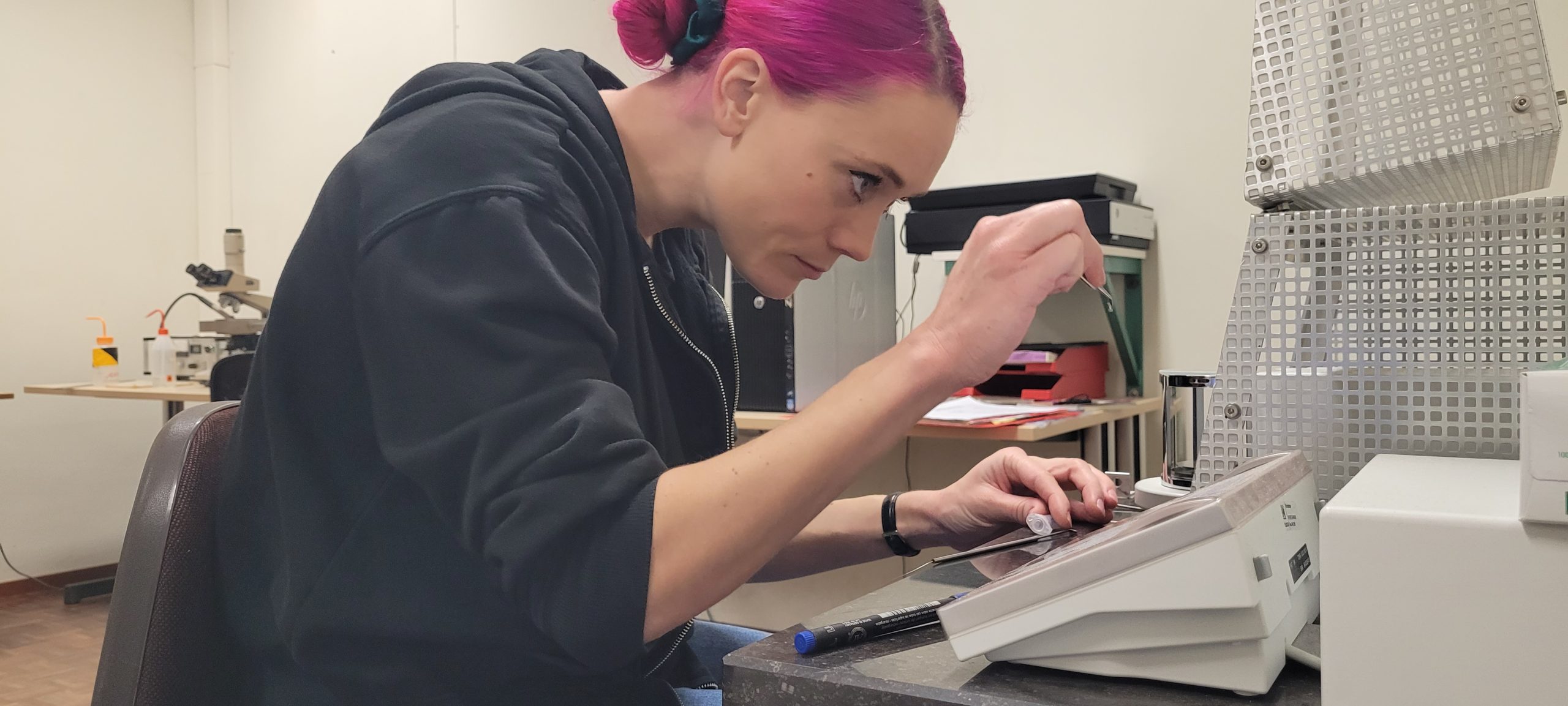
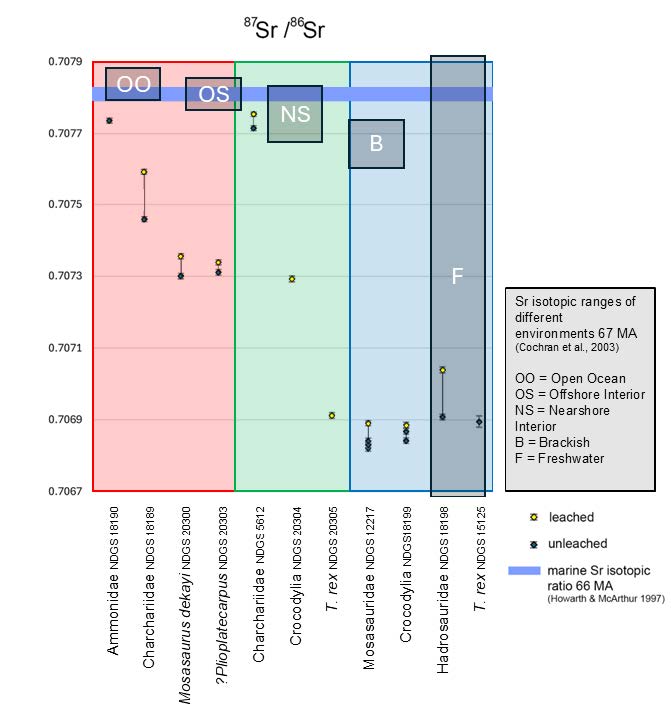
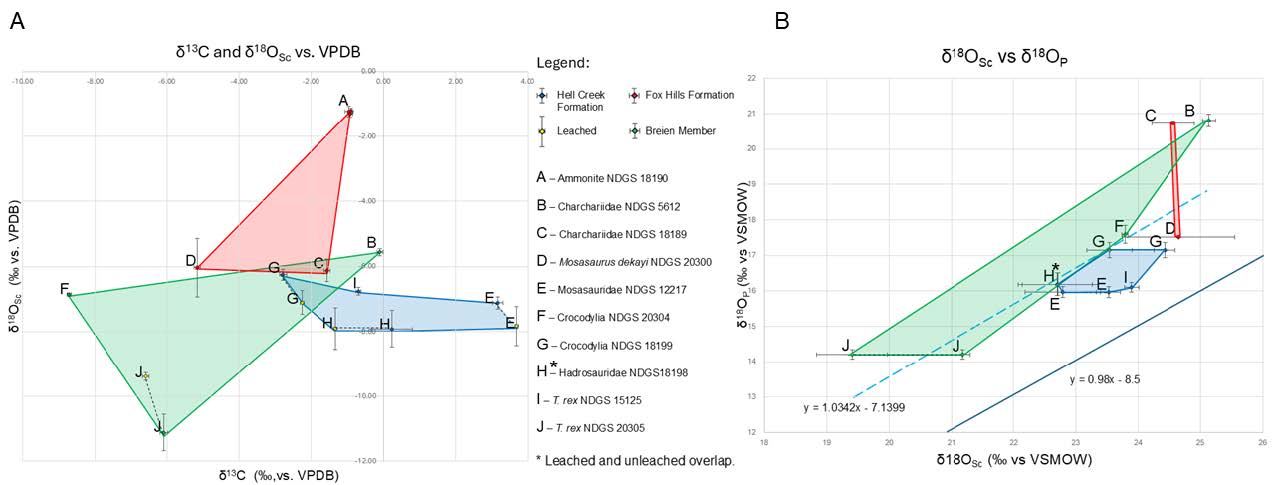
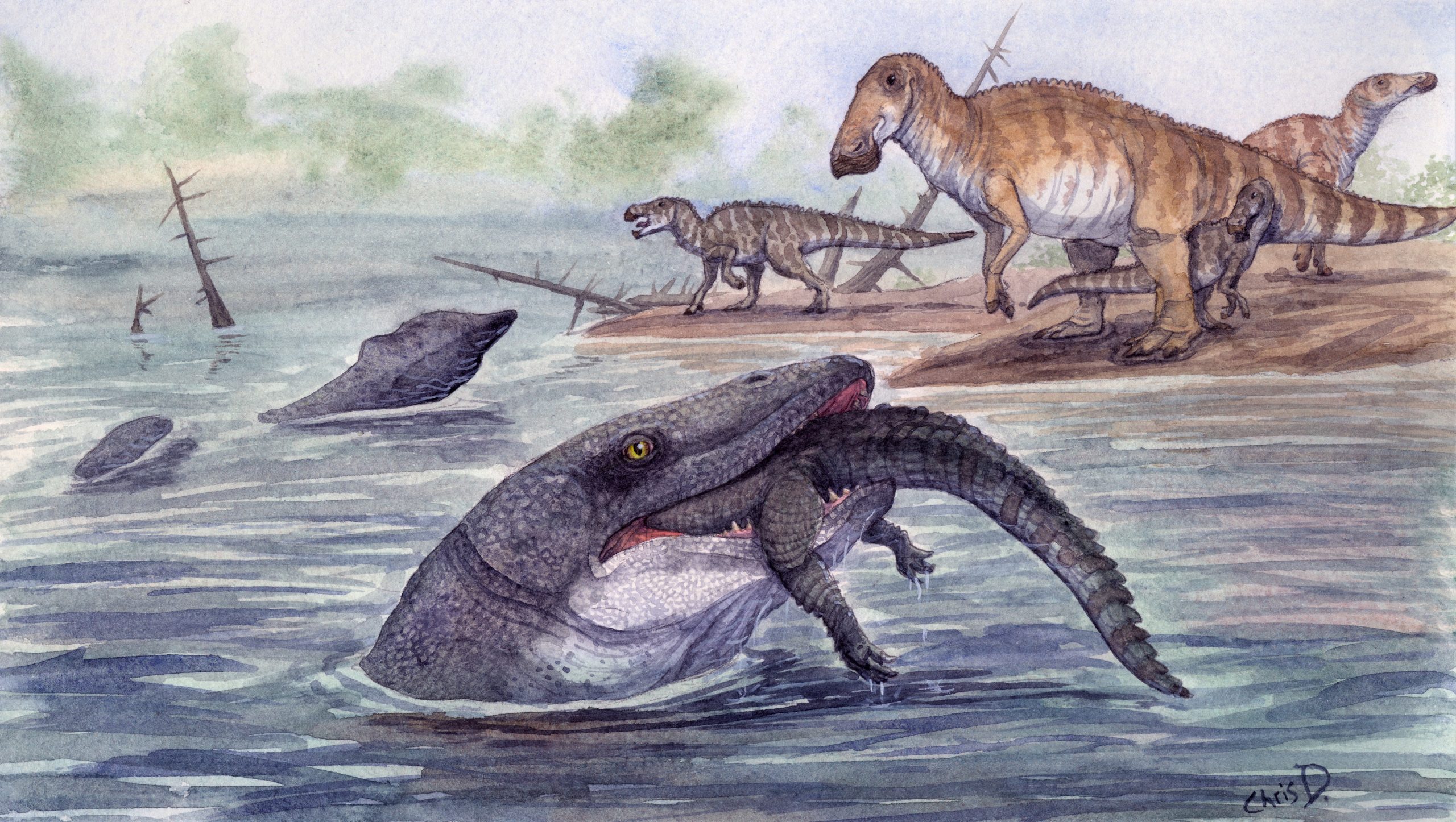
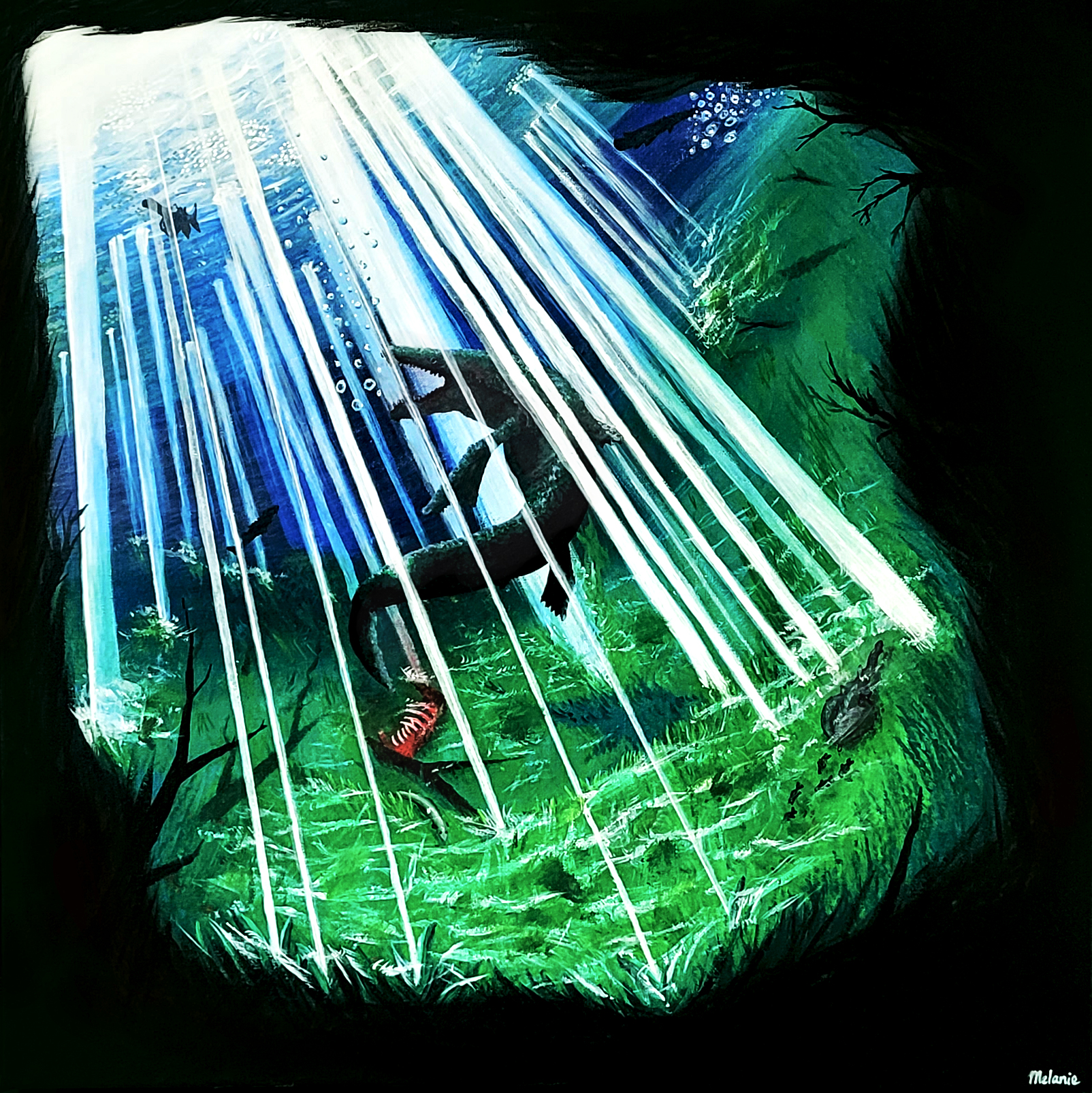
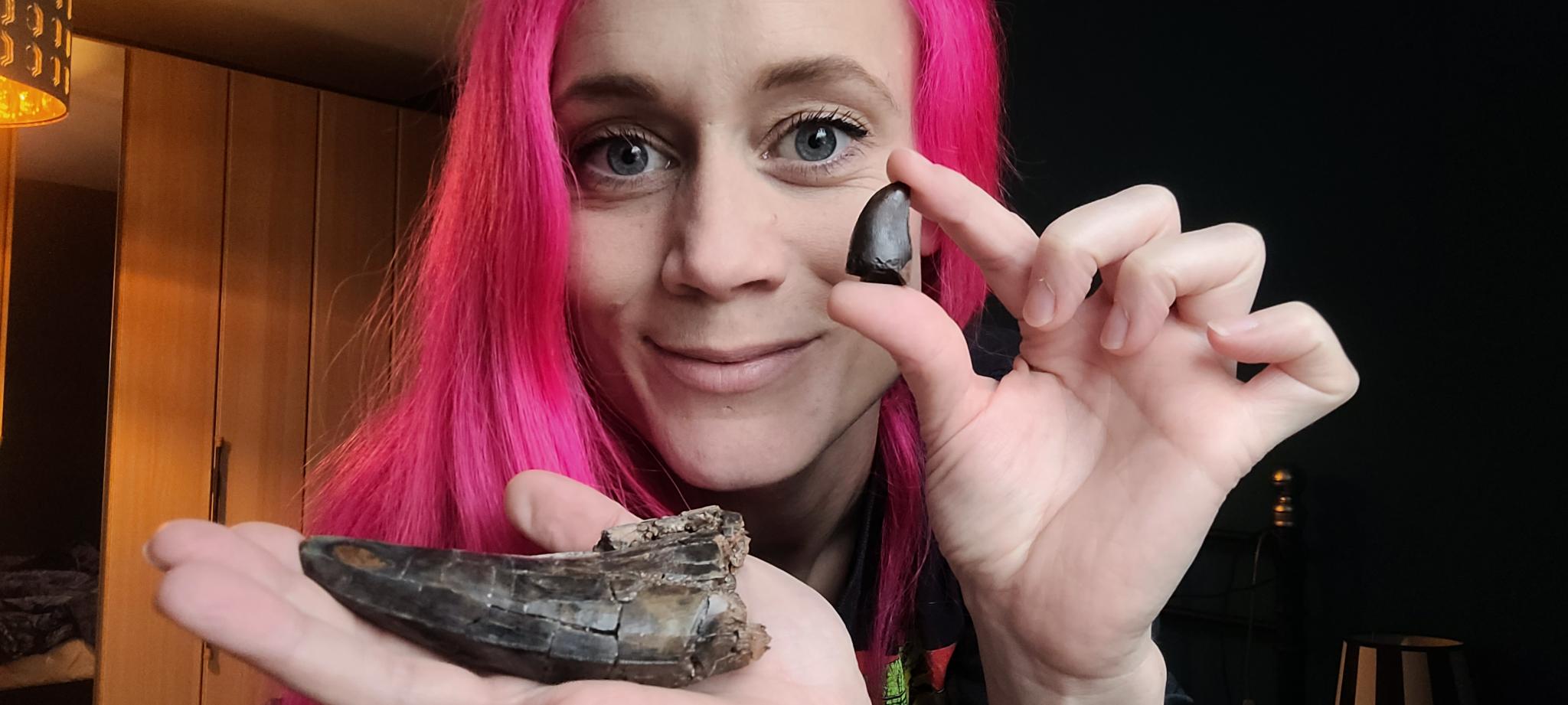
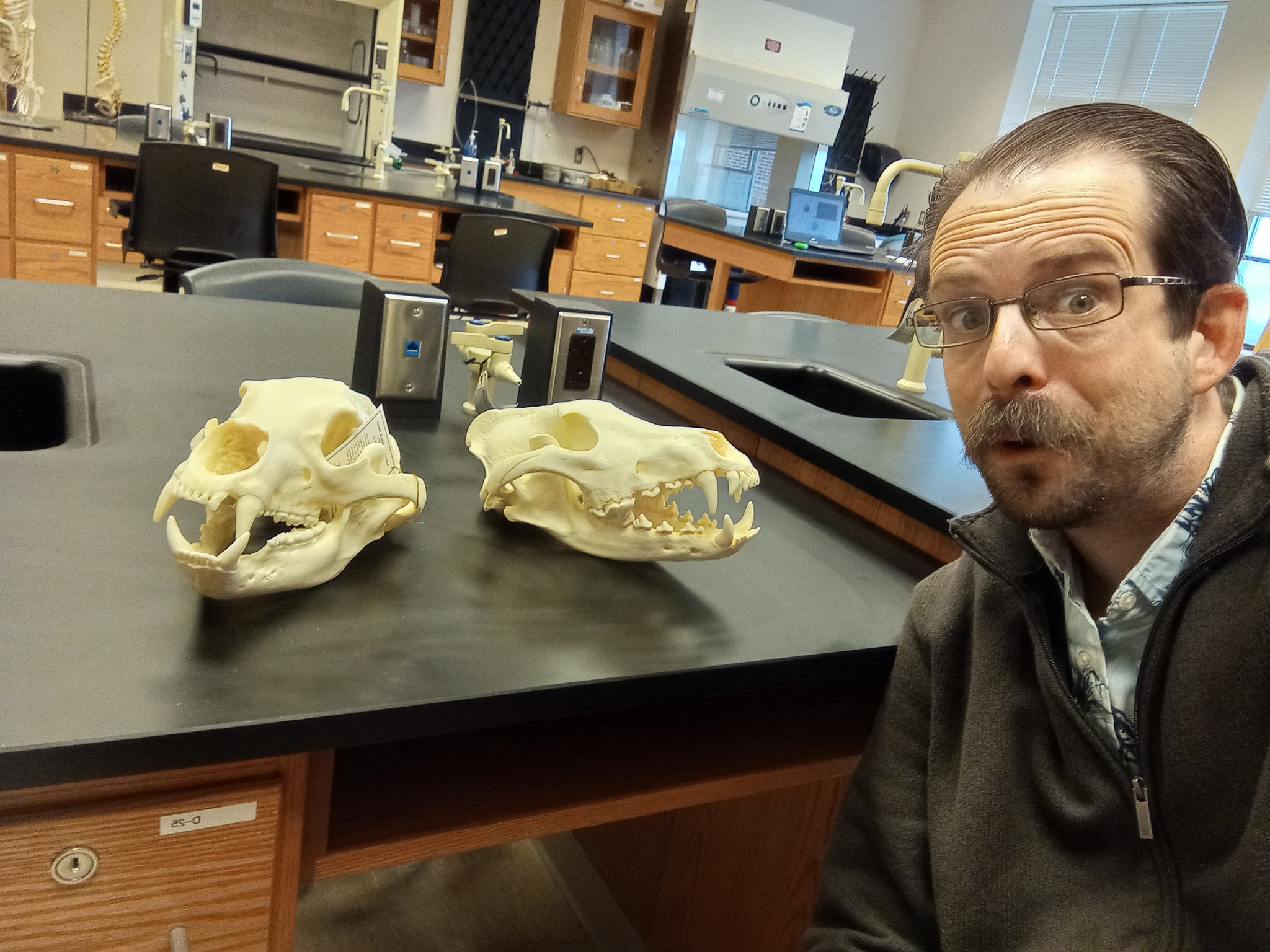
Map of the exposures of the Late Cretaceous (Maastrichtian) Hell Creek Formation in North Dakota. The blue pin represent the site (NDGS L4327) in Morton County where the mosasaur tooth from this study was discovered.This site is interpreted to have been the flood plain of a river and had only ever produced terrestrial or freshwater fossils including dinosaurs, turtles and crocodilians. Image: Volunteers digging with the North Dakota Geological Survey. (Why not volunteer yourself?)The Tyrannosaurus rex tooth (NDGS 15125) collected by Trissa Ford. This fossil was is pretty poor shape for a tooth and so great care was taken to collect it safely, with the whole football-sized block of rock being wrapped in plaster and destined for the prep labs.As the T. rex tooth was being excavated, a mosasaur tooth (NDGS 12217) was fortuitously discovered. Had the former tooth not first been found and collected in such a way, might the latter tooth have been missed entirely?Details of the mosasaur tooth, identified as belonging to a prognathodontine, and its approximate position relative to the T. rex tooth. But what is a mosasaur tooth even doing in this freshwater deposit?Not only that, but when the T. rex tooth finally went in for work in the prep lab, another fossil was discovered: the jaw of a crocodilian (NDGS 18199). Incredibly, the jaw still had teeth embedded. So that’s three teeth from the same rock.If that wasn’t enough, hadrosaur remains are abundant at the site, so there was no difficulty in getting hold of one of their teeth. That’s three teeth in immediate association and one that’s very close. Having the same kind of structure from different organisms all found in the same location is a geochemist’s dream!Melanie was able to mine material from each fossil and examine the ratios of isotopes of different elements within. Each was able to act as a different kind of palaeoenvironmental proxy, allowing her to determine the conditions in which each fossil lived. The ratio of strontium isotopes in each fossil can show the influence of freshwater. The ratios of strontium isotopes in marine environments is very predictable, but in freshwater, the signal is a lot more varied. Here, the fossils from the Morton County site (blue) -including the mosasaur- are all well removed (bottom of the graph) from the narrow range expected of marine fossils (top of graph). Even the fossil of Mosasaurus dekayi from an older site, filled with marine fossils, shows a likely freshwater influence. This could be evidence for a halocline where the old Western Interior Seaway (WIS), having lost its connection to the open ocean, now has a layer of freshwater on top. The marine organisms (ammonites and sharks) can remain in the lower saltier water, but the mosasaurs would need to travel through freshwater to breathe air.Plots for carbon and oxygen isotopes. Carbon isotopes (left plot, X axis) can be used as indicators of an organisms position in a food web with 13C accumulating the further up the chain you go. The higher values (to the right of this plot) show that the mosasaur (E) from Morton County (blue shaded area) was certainly no lower in the food chain than any other animal from that site. Unfortunately the sample sizes are too low to make any kind of claim that it sat atop of the food chain. Oxygen isotopes can also be used to indicate whether an organism lives in environments with marine or freshwater (right plot) here, we see that the mosasaur (E) closely plotted to all the other freshwater animals from the Morton County site, each with relatively little 18O compared to true marine organisms.The chemical evidence all points towards the conclusion that mosasaurs were capable of living in freshwater environments. What does this mean for our understanding of both mosasaurs and of the Hell Creek Formation? Image: Cristopher DiPiazza.This study reveals how powerful geochemistry can be for interpreting past ecologies and environments. It also shows how important fieldwork and a little bit of luck can be in the scientific process. Image: Melanie During.Dr Melanie During with Tyrannosaurus rex tooth (NDGS 15125) and mosasaur tooth (NDGS 12217).Nathan Van Vranken in his teaching lab at Eastern West Virginia Community and Technical College.
We are committed to creating the highest quality palaeontological multimedia with no advertisements and at no cost to our audience.
We are now using Patreon to allow us to give something extra back to all those who contribute to the improvement of our show. Please chck out our reward tiers below!
Thank you for anything you can give!