Episode 172: Rhynchocephalians
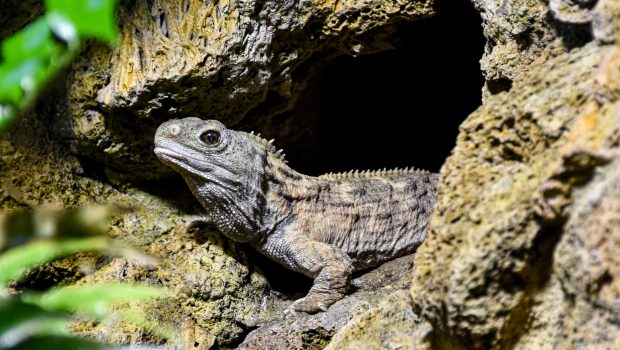
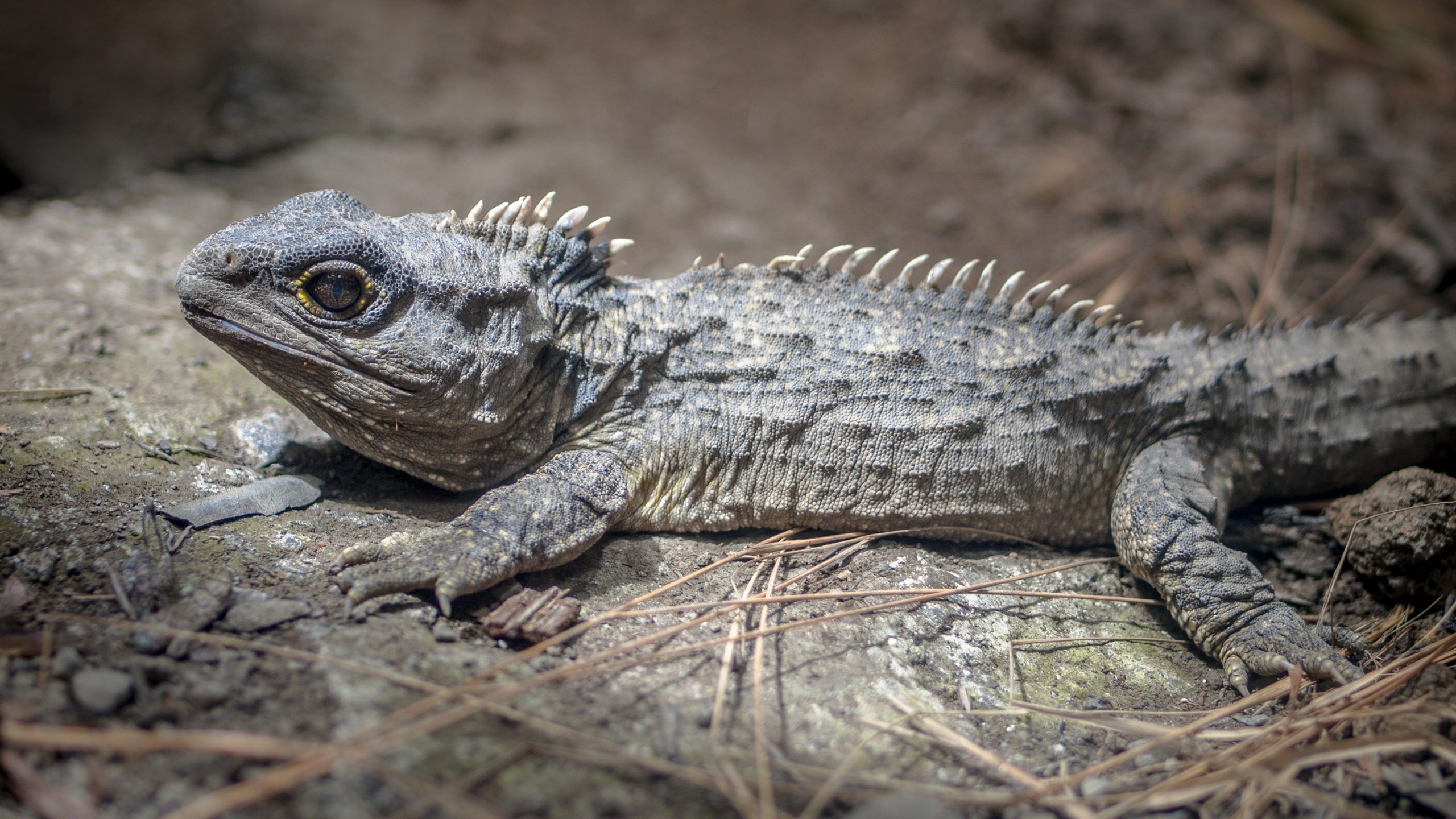
Today, there is only one living species of rhynchocephalian: the tuatara of Aotearoa/New Zealand. Despite today’s paucity of species, this was once a diverse group of reptiles, with a wide range of lifestyles from swimming in the ocean to climbing trees. Once highly abundant around the world, reasons for their decline are still debated and may have had to do with competition from their relatives, the squamates, or changing environments.
Rhynchocephalians are related to lizards and snakes within Lepidosauria, but despite their outward appearance, are not lizards themselves and have a number of differences that make them distinct. In this interview, we speak to Dr. Victor Beccari, an expert in rhynchocephalians, and discuss this and more about this fascinating group of reptiles.
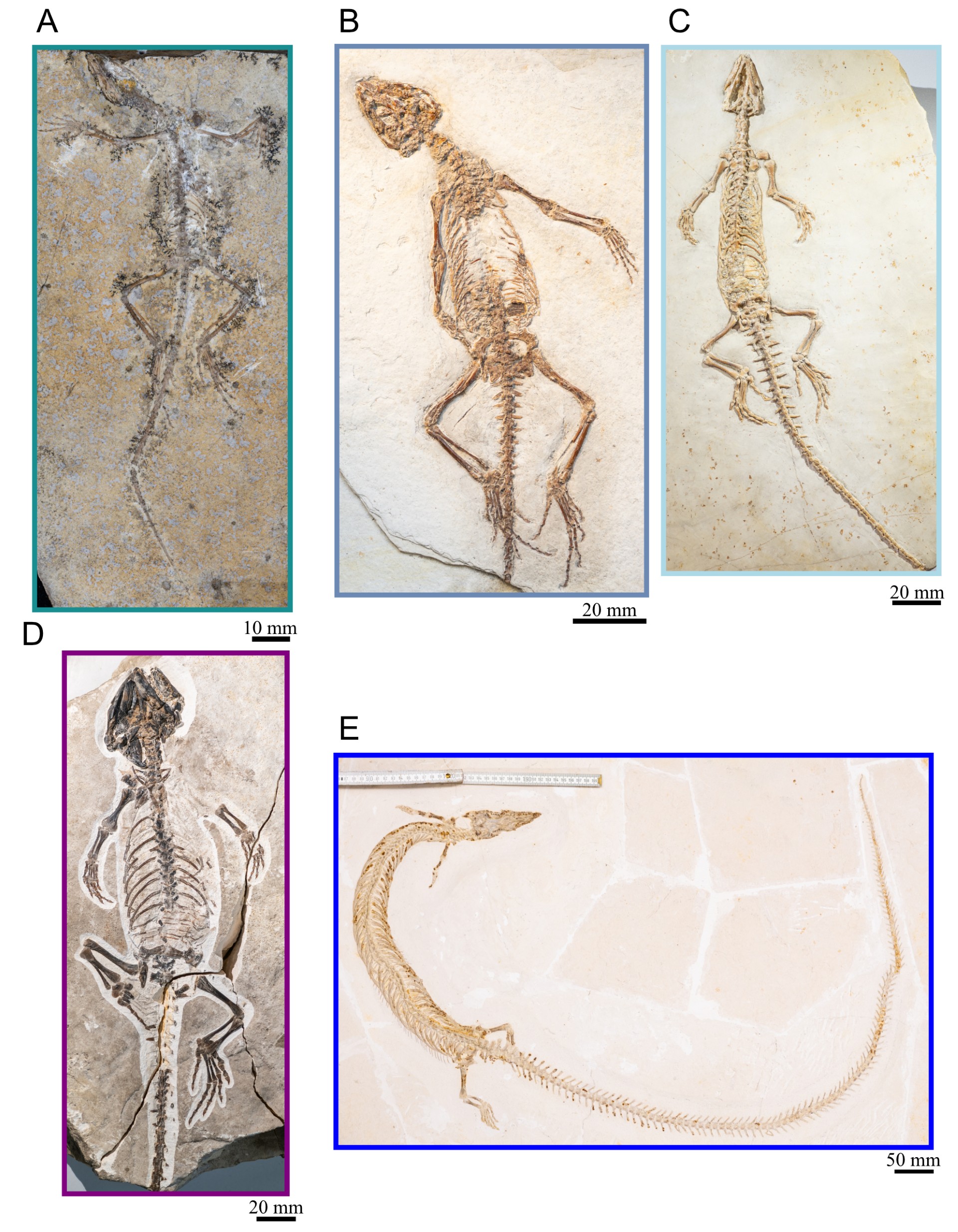
Fossils from the Solnhofen Archipelago in modern day Germany are often beautifully preserved and reveal this past diversity, but are flattened, making some aspects of studying morphology challenging.

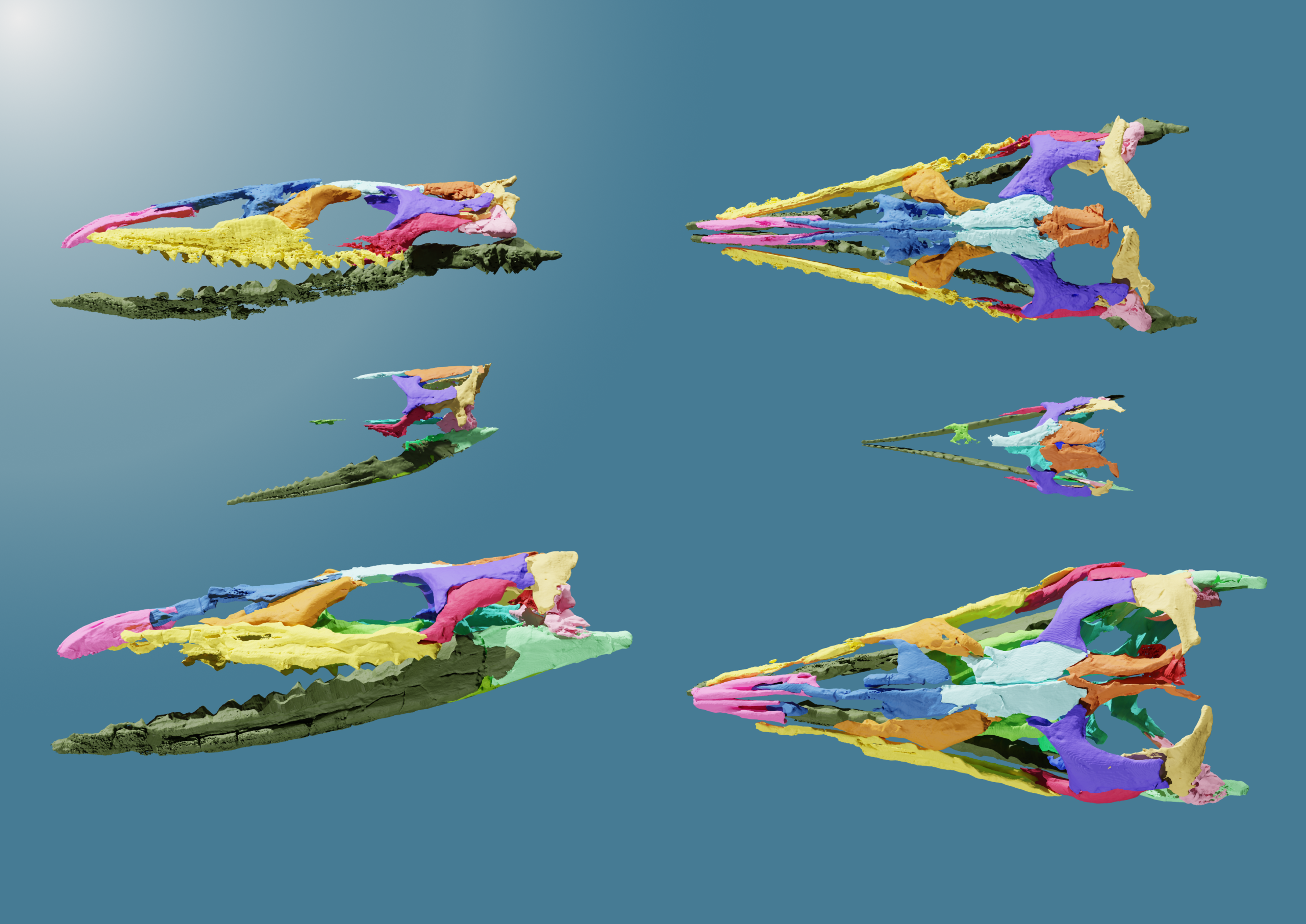
Pleurosaurus was an unusual genus of marine rhynchocephalian with an elongate body and tail as adaptations for swimming. CT scans allow for the reconstruction of skulls from disarticulated remains, giving us a more complete picture of what the animal would have looked like in life. Some bones have been taphonomically distorted (squashed during the fossilisation process) and so may have looked slightly different. This image shows two species of Pleurosaurus, with a partial juvenile skull in the centre that tentatively belonged to P. ginsburgi. It had an unworn dentition, so its teeth had not been used much, and unfused neural arch pedicles in the presacral vertebrae, adding weight to its being a young juvenile and not a small adult.
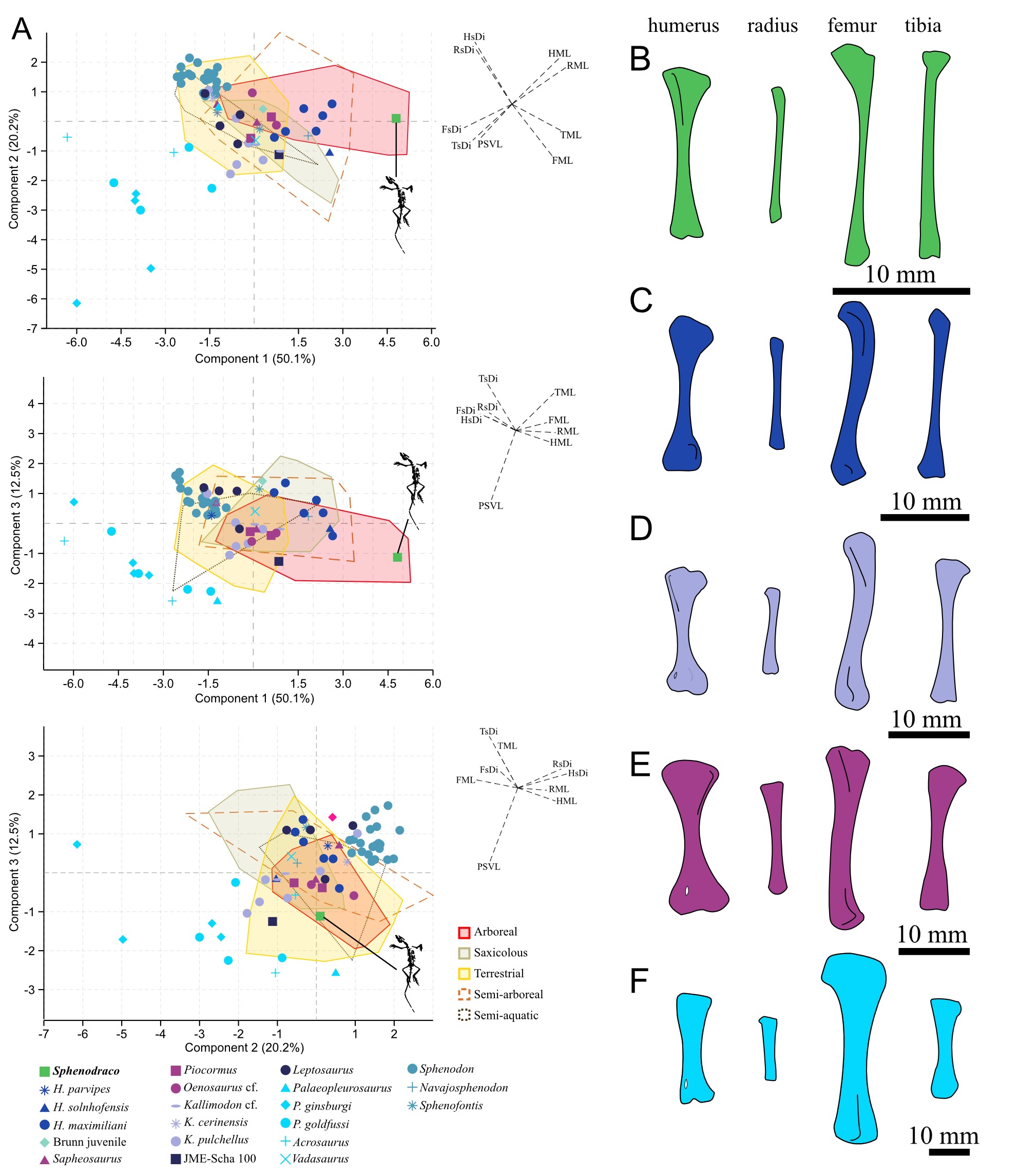
The different colours of the shapes in the ecomorphospace refer to the life habit of the lizards, whether they are arboreal (climbing), saxicolous (living amongst rocks), terrestrial (living on the ground), semi-arboreal, or semi-aquatic (living some of their life in the water). These are compared to extinct rhynchocephalians and Sphenodon (tuatara) to hypothesise how each species was living. It is assumed that if an animal falls within the space of the arboreal lizards, for example, that it was likely arboreal, although there is considerable overlap with the hulls of each ecology. Sphenodraco, the new genus described in Beccari 2025a falls within the arboreal ecomorphospace every time.
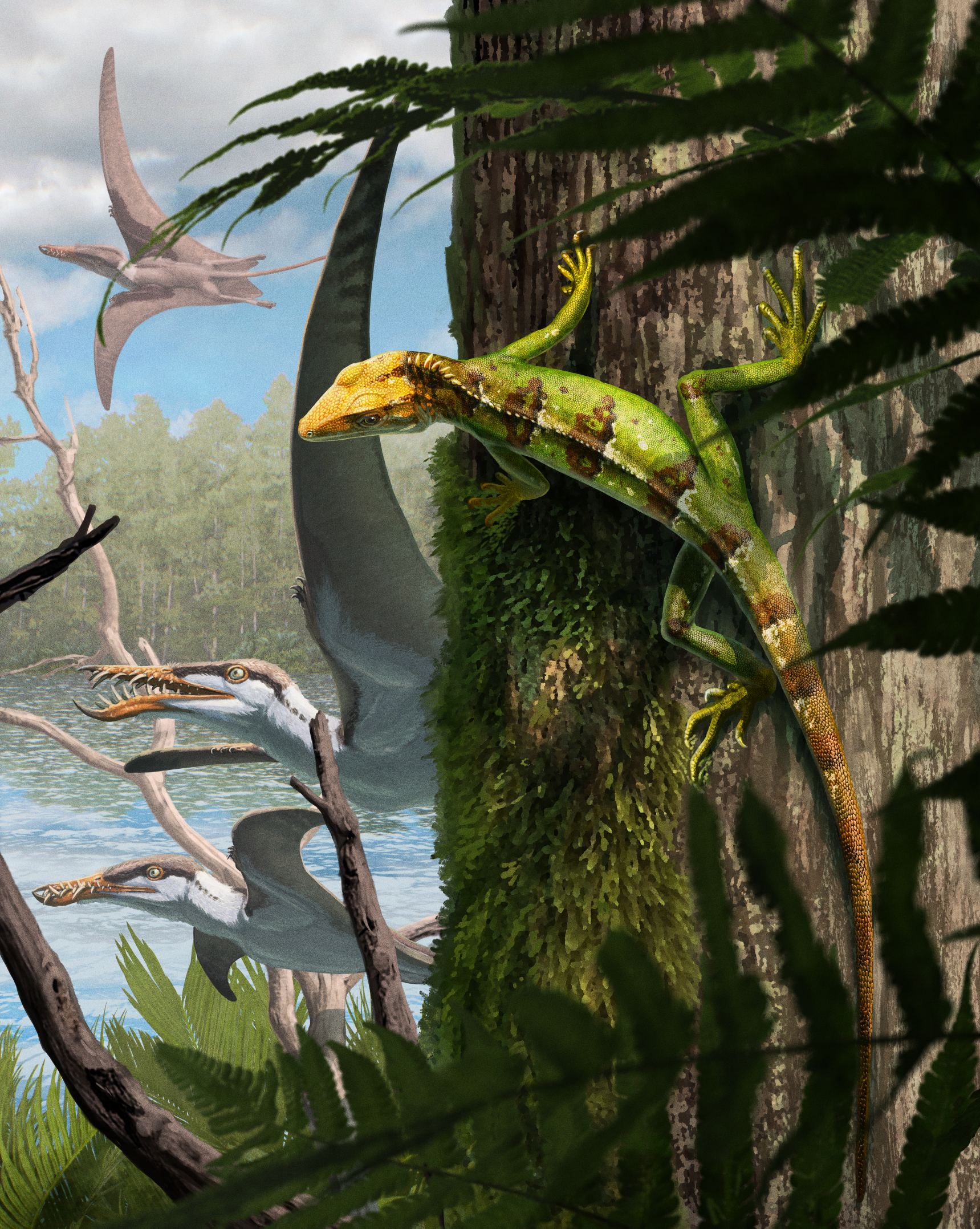
Signs that Sphenodraco was arboreal include its elongated limbs, recurved claws, and limb and manus (hand) proportions also seen in exclusively arboreal lizards.
References:
Beccari, V., Guillaume, A. R. D., Jones, M. E. H., Villa, A., Cooper, N., Regnault, S., & Rauhut, O. W. M. (2025a). An arboreal rhynchocephalian (Lepidosauria: Rhynchocephalia) from the Late Jurassic of Germany, and the importance of the appendicular skeleton for ecomorphology in lepidosaurs. Zoological Journal of the Linnean Society, 204(3), 39. https://doi.org/10.1093/zoolinnean/zlaf073
Beccari, V., Villa, A., Jones, M. E. H., Ferreira, G. S., Glaw, F., & Rauhut, O. W. M. (2025b). A juvenile pleurosaurid (Lepidosauria: Rhynchocephalia) from the Tithonian of the Mörnsheim Formation, Germany. The Anatomical Record, 308(3), 844–867. https://doi.org/10.1002/ar.25545
Related Posts

Society of Vertebrate Paleontology Annual Meeting 2025 →
Episode 170: Cariocecus bocagei →
Episode 166/167: Origin of Teeth →