Cretaceous
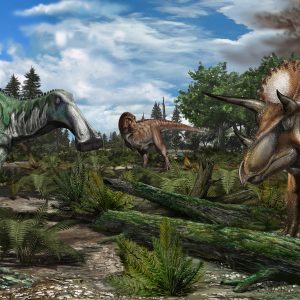
Episode 112: Extinction of the dinosaurs
Published on June 29th, 2020 | by Liz Martin-Silverstone
Was it the asteroid impact or volcanism that killed the dinosaurs... Read More →

The Paleogene period is a division of earth’s history spanning from around 66 to 23 million years ago, and during which life recovered following the end Cretaceous mass extinction. The Paleogene was a warm stable period with temperatures on average 4°C above present. However, around 55 million years ago, the planet experienced a short but severe warming phase. During the Paleogene, the continents continued to disperse. The Indian and Atlantic oceans widened while the Tethys Ocean gradually closed as Africa collided with Europe and India collided with Asia leading to Alpine and Himalayan mountain building. Drake’s passage opened between South America and Antarctica leading to cooling of the southern continent. On land and in the oceans, mammals became increasingly diverse and abundant. Most of the major mammal groups, from primates to whales, first appeared within the Paleogene. Birds also continued to diversify. One of the most successful plant groups; the grasses, also evolved during this time. By the end of the period, the Antarctic ice sheet had begun to form accompanied by global cooling and sea level fall.
Published on June 29th, 2020 | by Liz Martin-Silverstone
Was it the asteroid impact or volcanism that killed the dinosaurs... Read More →
Published on September 15th, 2019 | by Liz Martin-Silverstone
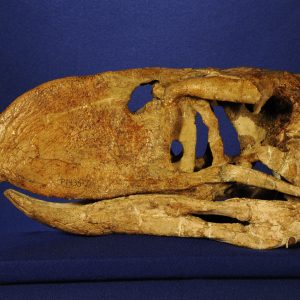
Terror birds, or phorusrhacids as they are known scientifically, are a group of large, flightless birds that lived during the Cenozoic, and truly lived up to their name. Known for their large, powerful skulls, and enormous [&hellip... Read More →
Published on August 1st, 2016 | by Laura Soul
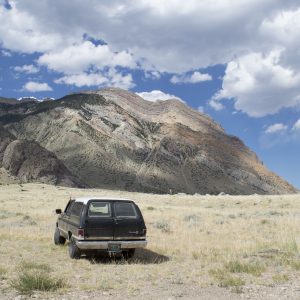
The Bighorn Basin in Wyoming has been an important area for research into terrestrial ecosystems for decades. The basin formed as part of the uprising of the Rocky Mountains in the west of North America, and [&hellip... Read More →
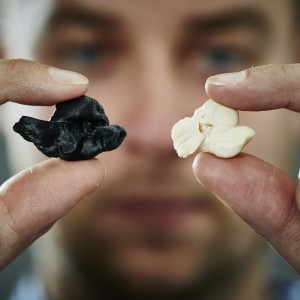
Published on April 13th, 2016 | by Liz Martin-Silverstone
Echolocation is an amazing ability that some mammals have evolved. Using sonar frequencies, dolphins and other toothed whales can communicate with each other and hunt prey, making the unique amongst marine mammals at being able to [&hellip... Read More →
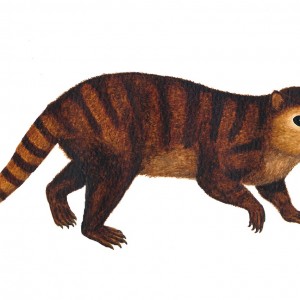
Published on October 5th, 2015 | by Liz Martin-Silverstone
The Cenozoic has often been described as the ‘Age of the Mammals’, while the Mesozoic was the ‘Age of the Dinosaurs’ which ended with the extinction of non-avian dinosaurs at the end of the Cretaceous. Mammals, [&hellip... Read More →
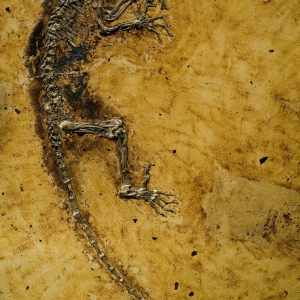
Published on September 16th, 2015 | by Liz Martin-Silverstone
Primate evolution is something that is heavily debated and not very well understood in palaeontology, but it is still heavily studied. In 2009, an amazing primate fossil was found in Messel, dating to approximately 47 million [&hellip... Read More →
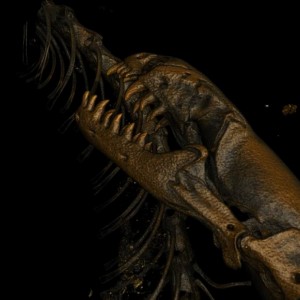
Published on June 1st, 2015 | by David Marshall
The Cretaceous-Paleogene (K-Pg) mass extinction was the latest of the ‘big five’ events. Approximately 75% of species went extinct, with the most notable victims being non-avian dinosaurs. But what happened afterwards? By which methods were some [&hellip... Read More →
Published on August 5th, 2014 | by David Marshall
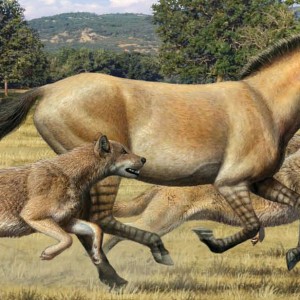
We’re all familiar with canines (dogs, wolves, jackals, foxes, etc), but these are just only one of three sub-families of the larger canid family to survive to the present day. There were also the Hesperocyoninae and [&hellip... Read More →
Published on February 1st, 2014 | by Joe Keating
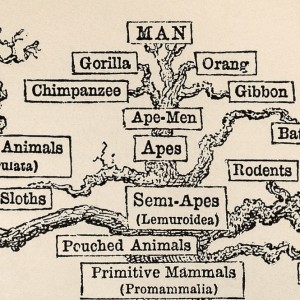
Mammals are an incredibly diverse and highly successful group of animals. They include some of the tallest, heaviest and fastest animals around today, as well as our own species. For over 100 years, biologists have attempted [&hellip... Read More →
Published on January 16th, 2014 | by Laura Soul
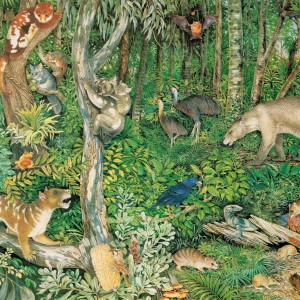
Continuing our look at Australia’s marsupials, we speak to Dr. Karen Black, also of the University of New South Wales. We discuss the Riversleigh fossil site, which fossils it contains, how they are preserved and what [&hellip... Read More →


 Episode 172: Rhynchocephalians
February 5th | by
Episode 172: Rhynchocephalians
February 5th | by
 Episode 171: Freshwater Mosasaurs
December 12th | by
Episode 171: Freshwater Mosasaurs
December 12th | by
 Society of Vertebrate Paleontology Annual Meeting 2025
December 3rd | by
Society of Vertebrate Paleontology Annual Meeting 2025
December 3rd | by
 Episode 170: Cariocecus bocagei
September 15th | by
Episode 170: Cariocecus bocagei
September 15th | by
 Episode 168/169: Grasslands
September 1st | by
Episode 168/169: Grasslands
September 1st | by