Browsing the "Jurassic" Category
The Jurassic period is a division of earth’s history spanning from around 201 to 145 million years ago, and during which dinosaurs became the dominant land vertebrates. By the Early Jurassic, the supercontinent of Pangaea had split into Laurasia, in the north, and Gondwana, in the south. Separating them was the Tethys Ocean. Sea levels in the Jurassic were high and the climate was warm and humid, leading to the growth of vast forests of conifers and ferns. In the oceans, marine reptiles continued to diversify, as did ammonites. During the Jurassic, reef-building rudist bivalves and belemnite cephalopods appeared. On land, dinosaurs flourished; among the most successful were the giant long-necked sauropods. Bird-like dinosaurs such as Archaeopteryx began to appear. In the skies, pterosaurs were common.
Published on February 5th, 2026 | by Emily Keeble
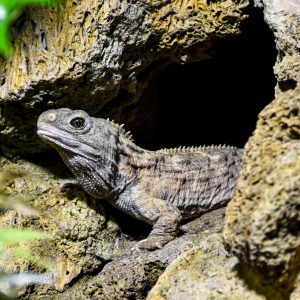
Today, there is only one living species of rhynchocephalian: the tuatara of Aotearoa/New Zealand. Despite today’s paucity of species, this was once a diverse group of reptiles, with a wide range of lifestyles from swimming in [&hellip... Read More →
Published on September 15th, 2025 | by David Marshall
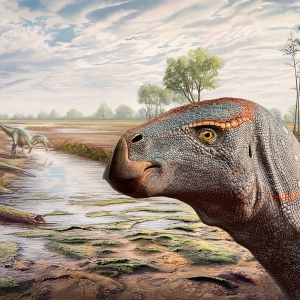
The iguanodontians were an incredibly successful group within the Cretaceous. They could reach incredible sizes, with the largest species even matching the proportions of some sauropods, and they also had an incredible palaeogeographic range, meaning that [&hellip... Read More →
Published on July 23rd, 2024 | by David Marshall
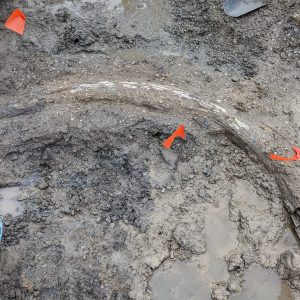
We're off to Cerney Wick to conduct some Pleistocene/Jurassic fieldwork in this special episode... Read More →
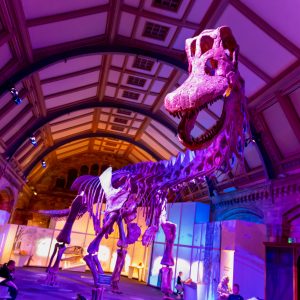
Published on March 4th, 2024 | by Guest Blogger
Harrie explores some of the factors enabling sauropod gigantism... Read More →
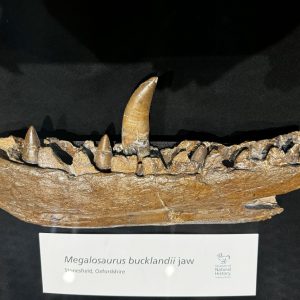
Published on February 7th, 2024 | by Emily Keeble
We're in London to celebrate 200 years of dinosaur research... Read More →
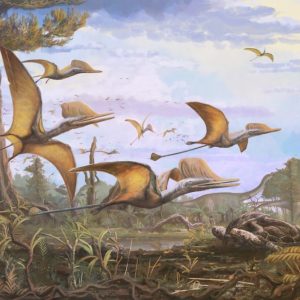
Published on February 6th, 2024 | by Sophie Pollard
Dr Liz Martin Silverstone takes us through the discovery and preparation of a new species of darwinopteran Pterosaur... Read More →
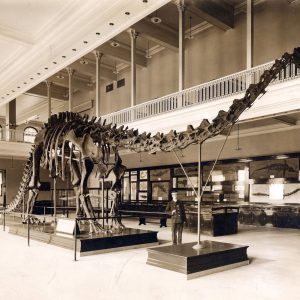
Published on December 8th, 2023 | by Sophie Pollard
We take a look at the reconstructed history of the Carnegie Diplodocus with Dr Mike Taylor... Read More →
Published on October 25th, 2023 | by David Marshall
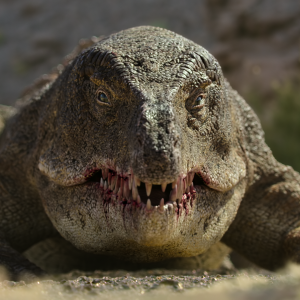
We're granted exclusive access to this new Netflix documentary... Read More →
Published on October 8th, 2023 | by David Marshall
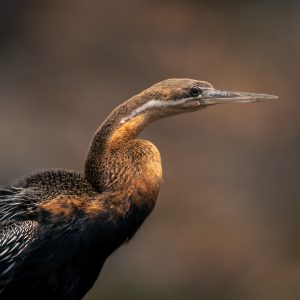
We're joined by "neckspert" Dr Ryan Marek to explore the evolutionary significance of bird necks... Read More →
Published on December 15th, 2022 | by Guest Blogger
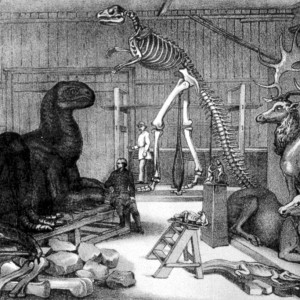
We explore the origins of dinomania and the historical relationship between the science and art of palaeontology... Read More →