The Ordovician period is a division of earth’s history spanning from around 485 to 443 million years ago, and during which life continued to diversify following the Cambrian ‘explosion’. During the Ordovician, planktonic organisms increased in diversity, corals became common and the first vertebrates flourished. The continents were largely confined to the southern hemisphere, however they were rapidly drifting apart and northwards owing to an increase in production of new ocean crust. The Ordovician was a period of mountain building and volcanism owing to the gradual closing of the Iapetus Ocean, which separated the ancient super-continents of Laurentia and Gondwana. Sea levels reached 200 meters above present during the Ordovician, meaning much of the continental landmasses were flooded by shallow seas. The end of the Ordovician is characterised by severe glaciations contemporaneous with a major drop in sea level and the second largest extinction event in earth’s history.
Published on June 1st, 2014 | by David Marshall
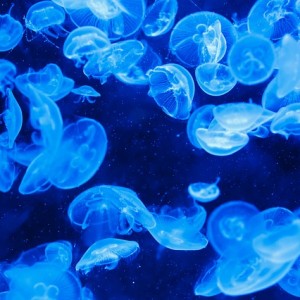
One of the longest-ranging and outwardly primitive-looking groups of animals on the planet are the Medusozoa. In consisting of around 95% water, it may be surprising to know that there is a fossil record of jellyfish, [&hellip... Read More →
Published on September 1st, 2013 | by Joe Keating
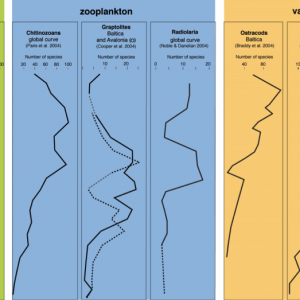
The Great Ordovician Biodiversification Event, or ‘GOBE’, describes one of the most important increases in biodiversity in the history of life on earth. During a relatively short time span of some 25 million years, an explosion [&hellip... Read More →
Published on July 1st, 2013 | by David Marshall
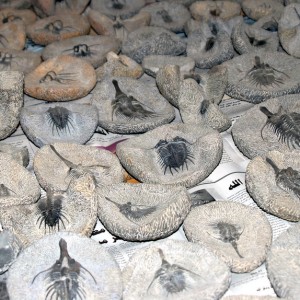
Trilobites are one of the most instantly recognisable groups of fossils. They were present from the very start of the Paleozoic and went on the fill a great number of ecological roles before going extinct at the Permo-Triassic [&hellip... Read More →
Published on February 15th, 2013 | by David Marshall
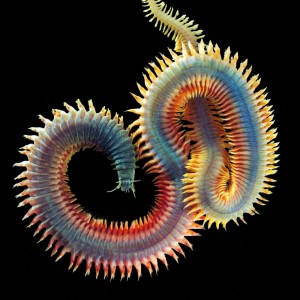
Fossils, at the best of times, are difficult to interpret. Palaeontologists attempt to reconstruct organisms from what little remains are left. This can be relatively simple for groups that we are familiar with today; you can [&hellip... Read More →
Published on September 1st, 2012 | by David Marshall
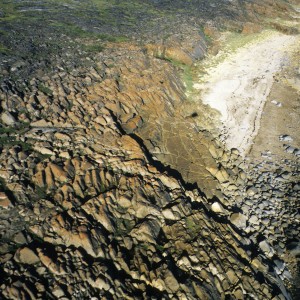
In June we got the opportunity to speak to Dave Rudkin, curator of arthropods at the Royal Ontario Museum, Canada. In our interview we covered his discovery of Isotelus rex, the world’s largest trilobite, and discussed arthropod [&hellip... Read More →