Progressive Palaeontology 2018
June 7th, 2018 | by David Marshall
Welcome to our coverage of Progressive Palaeontology, the Palaeontological Association’s conference for early-career academics. The conference this year is held [&hellip

June 7th, 2018 | by David Marshall
Welcome to our coverage of Progressive Palaeontology, the Palaeontological Association’s conference for early-career academics. The conference this year is held [&hellip
May 24th, 2018 | by David Marshall
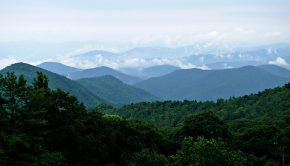
The Appalachian mountains, span the Eastern margin of the United States of America. They are predominantly composed of Paleozoic rocks, [&hellip
April 6th, 2018 | by David Marshall
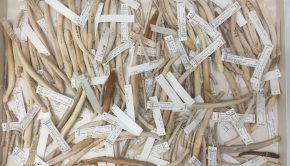
The buculum is a bone present in the head of the penis of most mammals. Whilst a few mammals, like [&hellip
March 17th, 2018 | by David Marshall
Archaeopteryx is perhaps one of the most iconic taxa in the fossil record. Exclusively found in the Late Jurassic Solnhofen [&hellip
February 1st, 2018 | by David Marshall
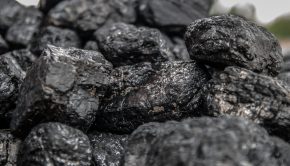
The Carboniferous (Latin for ‘coal-bearing’) is a period of the Paleozoic Era named after the massive accumulations of coal that [&hellip
January 7th, 2018 | by David Marshall
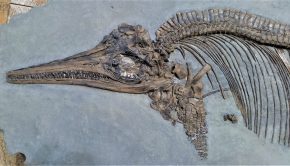
Ichthyosaurs are large marine reptiles that existed for most of the Mesozoic Era. The most familiar forms superficially represent dolphins, [&hellip
January 6th, 2018 | by David Marshall
Geology, as a subject, has for the most part assumed that there were no fossils to be found earlier than [&hellip
December 16th, 2017 | by David Marshall
The 61st Annual Meeting of the Palaeontological Association was held at Imperial College London. WELCOME ADDRESS How different is reality [&hellip
October 17th, 2017 | by David Marshall
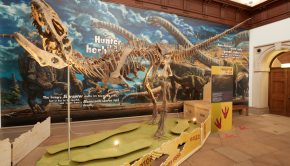
‘Dinosaurs of China’ at Wollaton Hall, Nottingham, UK, is a one-time only world exclusive exhibition of dinosaurs. Featuring fossils and [&hellip
October 1st, 2017 | by David Marshall
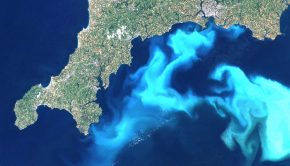
Coccolithophores are tiny unicellular eukaryotic phytoplankton (algae). Each is covered with even smaller calcium carbonate plates called coccoliths and it [&hellip


 Episode 175/176: Insect Gigantism
May 2nd | by
Episode 175/176: Insect Gigantism
May 2nd | by
 Episode 174: A History of Dinosaurs in 50 Fossils
April 15th | by
Episode 174: A History of Dinosaurs in 50 Fossils
April 15th | by
 Episode 173: Petrified Forest
March 17th | by
Episode 173: Petrified Forest
March 17th | by
 Episode 172: Rhynchocephalians
February 5th | by
Episode 172: Rhynchocephalians
February 5th | by
 Episode 171: Freshwater Mosasaurs
December 12th | by
Episode 171: Freshwater Mosasaurs
December 12th | by