Episode 60: Determining Diet
March 4th, 2016 | by Joe Keating
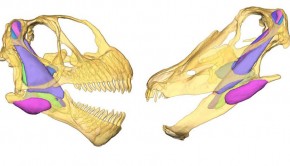
Diet is perhaps the most important aspect of ecology. As such, understanding the diet of extinct animals is crucial if [&hellip

March 4th, 2016 | by Joe Keating
Diet is perhaps the most important aspect of ecology. As such, understanding the diet of extinct animals is crucial if [&hellip
February 22nd, 2016 | by David Marshall
Beneath the city of Chemnitz, Germany, exists a entire fossilised forest. This whole ecosystem was preserved in life-position during a [&hellip
January 15th, 2016 | by Liz Martin-Silverstone
One of the most difficult aspects of palaeontology is understanding how extinct animals moved around. It’s one thing to find [&hellip
January 1st, 2016 | by Liz Martin-Silverstone
The Wealden Supergroup of southern England is known for it’s Cretaceous fossils, particularly of dinosaurs, but also crocodilians, pterosaurs, lizards, [&hellip
December 1st, 2015 | by Laura Soul
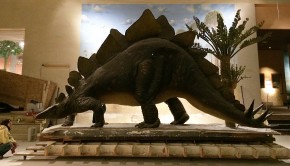
Preparators are specialist staff working in museums and universities worldwide. They perform a very wide variety of tasks from fieldwork [&hellip
November 30th, 2015 | by Laura Soul
This year the annual meeting of the Geological Society of America was held in Baltimore, Maryland. This is one of [&hellip
November 15th, 2015 | by Liz Martin-Silverstone
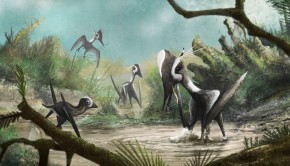
Pterosaurs were the first vertebrates to achieve powered flight, and lived in the skies above the dinosaurs during the Mesozoic. [&hellip
November 10th, 2015 | by Laura Soul
Welcome to our coverage of the Society of Vertebrate Paleontology (SVP) annual meeting from Dallas, Texas. This year was the 75th anniversary [&hellip
November 1st, 2015 | by Joe Keating
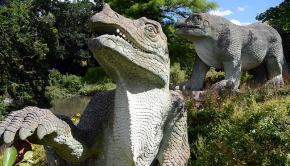
The ‘Crystal Palace Dinosaurs’ are a series of sculptures of extinct animals including dinosaurs, other extinct reptiles and mammals, which [&hellip
October 15th, 2015 | by Liz Martin-Silverstone
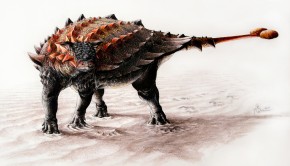
Ankylosaurs are a group of non-avian dinosaurs best known for their armour, tank-like bodies, and sometimes large tail clubs. First [&hellip


 Episode 173: Petrified Forest
March 17th | by
Episode 173: Petrified Forest
March 17th | by
 Episode 172: Rhynchocephalians
February 5th | by
Episode 172: Rhynchocephalians
February 5th | by
 Episode 171: Freshwater Mosasaurs
December 12th | by
Episode 171: Freshwater Mosasaurs
December 12th | by
 Society of Vertebrate Paleontology Annual Meeting 2025
December 3rd | by
Society of Vertebrate Paleontology Annual Meeting 2025
December 3rd | by
 Episode 170: Cariocecus bocagei
September 15th | by
Episode 170: Cariocecus bocagei
September 15th | by