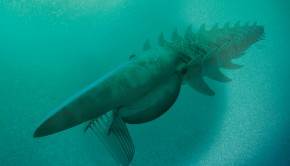
New filter-feeding anomalocaridid
March 11th, 2015 | by David Marshall
Ever since their first appearance in the fossil record some 530 million years ago, arthropods have been the most species-rich [&hellip

March 11th, 2015 | by David Marshall
Ever since their first appearance in the fossil record some 530 million years ago, arthropods have been the most species-rich [&hellip
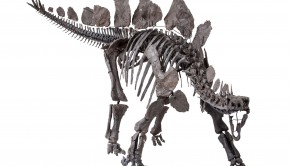
March 9th, 2015 | by Liz Martin-Silverstone
There’s been lots of news about Sophie the Stegosaurus at the Natural History Museum in London lately, and last week [&hellip
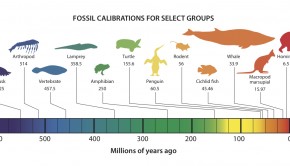
March 3rd, 2015 | by Liz Martin-Silverstone
Last week, the Fossil Calibration Database was launched. We spoke to Dr. Dan Ksepka, one of the leads on the [&hellip
March 3rd, 2015 | by David Marshall
GREAT NEWS: We’re finalists in the 10th Annual Podcast Awards! We’re humbled to hear that you’ve nominated us as your [&hellip
March 1st, 2015 | by David Marshall
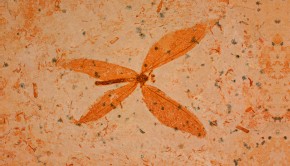
Insects are the most abundant and diverse group on animals on the planet today. Would they therefore also be expected [&hellip
February 1st, 2015 | by David Marshall
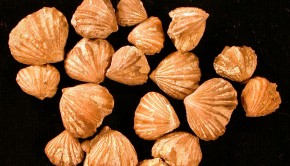
Brachiopods are some of the most common fossils to be found in rocks worldwide. Their thick, hard and (often) calcareous [&hellip
January 1st, 2015 | by David Marshall
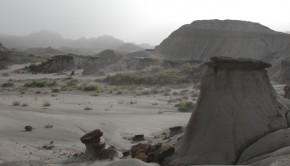
Alberta, Canada is one of the world’s richest areas for dinosaur fossils, and especially fossils from the Late Cretaceous. Iconic [&hellip
December 15th, 2014 | by David Marshall
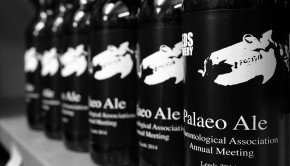
Welcome to our coverage of the Palaeontological Association’s 58th Annual Meeting, hosted by the University of Leeds, UK. This conference [&hellip
December 10th, 2014 | by David Marshall
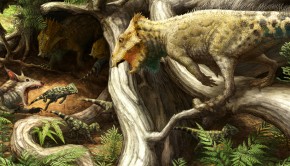
Ceratopsians are some of the most iconic dinosaurs that we recognise today including animals like Triceratops and Styracosaurus, with their [&hellip
December 1st, 2014 | by David Marshall
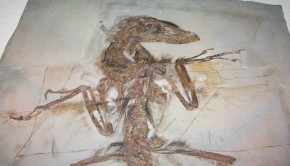
Theropods are what we would classically recognise as the meat-eating dinosaurs of the Mesozoic Era. They are best known from genera [&hellip


 On the origin of my first species: Dinodontosaurus isiyavamanda
September 18th | by
On the origin of my first species: Dinodontosaurus isiyavamanda
September 18th | by
 Episode 177: Cambrian Fecal Revolution
August 17th | by
Episode 177: Cambrian Fecal Revolution
August 17th | by
 Episode 175/176: Insect Gigantism
May 2nd | by
Episode 175/176: Insect Gigantism
May 2nd | by
 Episode 174: A History of Dinosaurs in 50 Fossils
April 15th | by
Episode 174: A History of Dinosaurs in 50 Fossils
April 15th | by
 Episode 173: Petrified Forest
March 17th | by
Episode 173: Petrified Forest
March 17th | by